
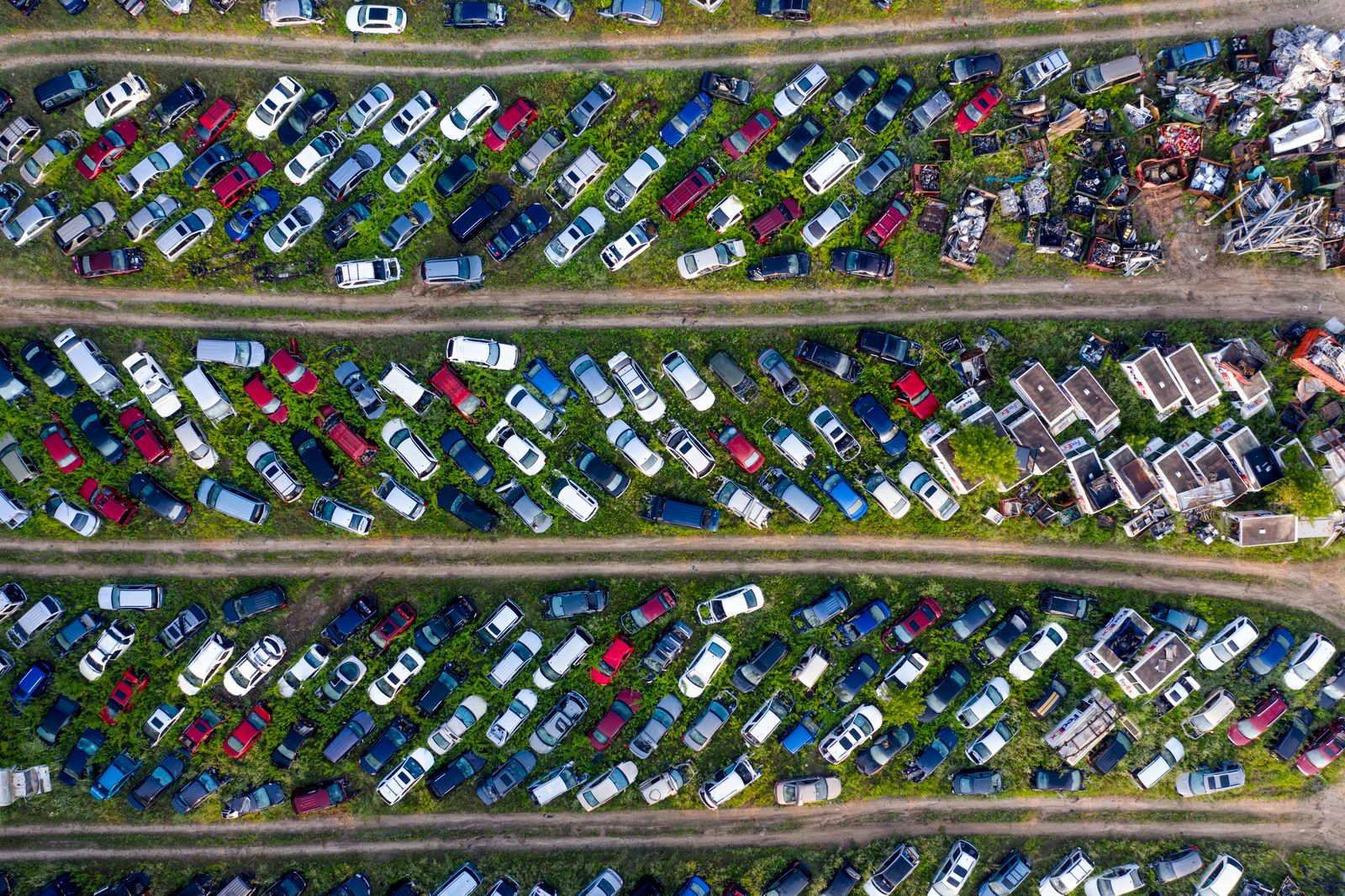
In California, "revived salvage" means a car was reported to the DMV as a total loss by its owner or insurer, then rebuilt to operating condition and registered again. Once it is back on the road, the title carries a "Salvaged" brand in the red Vehicle History box, and that brand does not come off. You can legally buy and drive one, but you should treat it as a wrecked-and-repaired car until a safety inspection report, a history report and your own mechanic say otherwise.
The term confuses people because sellers use it loosely. Some say "revived salvage" when they mean "salvage, not yet repaired." Others say "rebuilt" because it sounds nicer. I pulled the current California DMV and Bureau of Automotive Repair pages on November 8, 2026, so here is what the words mean on paper and what to ask before you hand over money.
Salvage, revived salvage and revived junk are three different things
The DMV draws clear lines. A salvage vehicle is one reported as a total loss, damaged enough that repairs were judged too expensive. A revived salvage vehicle is that same car after it has been rebuilt, inspected and reregistered. A revived junk vehicle is different again: it was reported to the DMV as dismantled, by an individual or a dismantler, and then restored. The DMV's procedures manual adds a wrinkle: a salvage vehicle that was reported dismantled has to be processed as revived junk, even if it started life as an insurance total.
On the title itself, California's branded-title page says the "Salvaged" brand covers cars hit by accidents, floods or vandalism and also includes previously dismantled (junk) vehicles. So the printed brand will not always tell you which story you are looking at. The history report and the seller's paperwork fill in that gap.
What it takes to get a revived salvage car registered
This is where California is stricter than a lot of states. To register a revived salvage vehicle, the owner needs an application (REG 343), proof of ownership such as a bill of sale or dismantler transfer, a vehicle verification (REG 31) or a CHP inspection certificate (CHP 97C), an electronic Vehicle Safety Systems Inspection (VSSI) certificate, and the fees. A smog certificate and, for pickups, a weight certificate may also be required.
The VSSI is the part buyers should care about. According to BAR, it replaced the old brake and lamp certificates and checks body structure, brakes and lights, the passenger compartment, steering and suspension, and tires and wheels. It also includes an OBD scan, an open safety recall check and a road test. Common fails include unresolved recalls, airbag or seatbelt problems, a cracked windshield, a TPMS light, and repairs that did not follow OEM procedures.
The DMV manual also notes that cars originally built with airbags must have working airbags to be reregistered, and missing airbags send the car to a CHP salvage inspection station. Out-of-state salvage vehicles get referred to the CHP too.
What the inspection does not promise
Passing the VSSI means a licensed station checked the safety systems on one day. It does not mean the car is straight, dry or reliable. The DMV's own warning on revived salvage cars says some are not properly repaired or tested, and some were rebuilt with stolen parts; if the CHP or DMV finds stolen parts, the car cannot be registered and the parts or car can be seized. That is a brutal way to lose a car you already paid for.
So before you buy, I would ask for:
- The vehicle safety report. BAR says buyers can check online whether a car passed, and a rebuilder selling the car must give you a copy of the report or other proof it passed.
- Parts receipts. Bills of sale for major parts, with VINs where they apply, are your best defense against the stolen-parts problem.
- Pre-repair photos. Honest rebuilders keep them. People who refuse usually have a reason.
- A history report. It shows the total-loss event, where the car was, and any earlier brands from other states.
Our salvage rebuild inspection checklist walks through what a mechanic should look at on a car like this.
Dealers have to disclose; private sellers are harder to pin down
California licensed dealers must pull an NMVTIS report before offering a used car for sale, and if it shows junk or salvage history, or the title carries a brand, they must post a disclosure on the car while it is displayed. Private sellers are also legally required to disclose salvage history, but the DMV admits that law is hard to enforce, especially for cars brought in from other states. If you are buying private, run the VIN yourself. Our guide to the NMVTIS public search covers the federal title check, and the California salvage and rebuilt title rules post covers the broader process.
Price, insurance and resale
Revived salvage cars sell cheap for a reason. Some insurers limit coverage on branded titles, some lenders will not finance them at all, and the brand follows the car when you try to sell it. Call your insurer with the VIN before you buy, and read our notes on rebuilt title insurance problems. If the discount is not big enough to cover a possible missed repair plus the resale hit, pass.
For the history piece, you can get CARFAX or AutoCheck through CarVins, an independent licensed reseller with no affiliation to either brand or to Experian. Free full reports do not exist, whatever a pop-up ad claims. Expect to pay a few dollars per VIN with us, but pricing gets adjusted from time to time, so confirm at checkout first. On a revived salvage car, it is cheap insurance against buying someone else's flood problem.

Comments (0)
No comments yet. Be the first to share your thoughts!
Log in to leave a comment.