
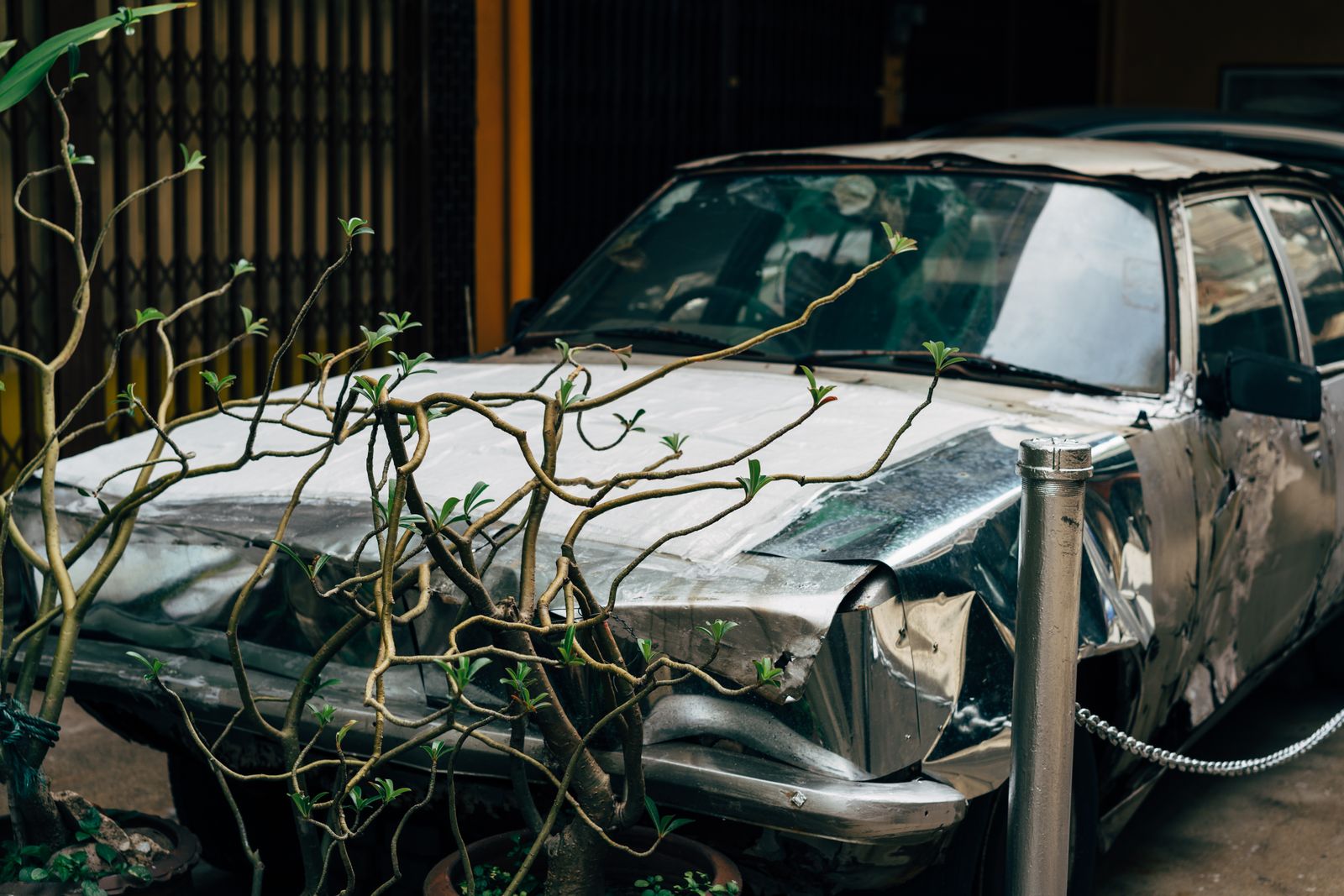
If you need the step-by-step U.S. buyer checklist for a car that came from Canada, start with our full Canada import title brand guide. This shorter page covers the Canadian side of the paper, which is where hidden brands and liens usually sit: read the provincial damage status in the province's own terms, get the provincial lien record, and work out the car's RIV and duty history before you agree on a price.
Provinces run their own registries, and each one names damage differently. A U.S. title clerk looking at an Ontario permit or a Quebec registration certificate may not translate the status the way you expect, and a seller has no reason to help. So the job here is narrow. You want the province's own record in hand, read in the province's words, before a U.S. title replaces it.
Provincial damage statuses use their own words
Ontario has four brands under its Mandatory Vehicle Branding Program: None, Irreparable, Salvage, and Rebuilt. The province says only cars branded None or Rebuilt can be driven on Ontario roads. Irreparable means parts or scrap only, and a Salvage car has to be repaired and pass a structural inspection to become Rebuilt. When I read the program page this week, one detail stood out: a car arriving in Ontario with a Rebuilt brand from another jurisdiction gets downgraded to Salvage until it passes a structural inspection at a DriveON facility. Ontario Regulation 376/02 also classes a total-loss car as irreparable if it was immersed in liquid to the bottom of its dashboard or higher, or if a major part of its electrical system was immersed.
Quebec's SAAQ uses irreparable, severely damaged, and rebuilt statuses. Its damaged-vehicles page says a flooded car gets the irreparable status, can never be put back into operation, and can be used only for parts. A severely damaged car has to be rebuilt and pass a technical appraisal and a mechanical inspection by an SAAQ agent before it earns rebuilt status. Other provinces have their own terms and thresholds, so ask for the record from the province where the car actually lived. Blunt risk: a Quebec flood car is not legally drivable there at all, so one that turns up in the U.S. with a clean title has a paperwork chain worth reading line by line. Our explainer on flood title vs salvage title shows how U.S. states label the same damage.
Liens live in the provincial record, so get it in writing
In Ontario, a private seller is legally required to give the buyer a Used Vehicle Information Package (UVIP). It lists the Ontario registration history with odometer readings, the last known condition of the car, and lien information. The province warns that a lien claimant has a right to the car, or to the amount of the lien, from the buyer once the transfer is done. A car that crossed the border with a Canadian loan still open can carry that problem with it. Ask a U.S. dealer selling a former Ontario car for the UVIP or the lender's release letter, and ask a private seller in other provinces for that province's lien search result. Our post on buying a car with a lien from a private seller covers the payoff side.
Round trips through RIV, and what duty tells you
Some "Canadian" cars started in the U.S. A car that went north had to clear Transport Canada's Registrar of Imported Vehicles: recall clearance before entry, a Vehicle Import Form at the border, Canadian modifications such as daytime running lamps or an immobilizer, and an RIV inspection within 45 days, or one year for a salvage vehicle. Leaving the U.S., CBP wants the export documents submitted at least 72 hours before the car crosses. Coming back, CBP says a car exported for private use can return duty-free with proof of prior U.S. registration. So a real round trip leaves paper on both ends, and the Canadian years sit in the middle.
Duty is the other paper clue. CBP lists foreign-made cars at 2.5% and trucks at 25%, and duty-free treatment under USMCA requires rules-of-origin certifications from the producer. When I checked CBP's page this week (last updated May 2026), it said vehicles made before 2020 are not likely to qualify. Duty rules have shifted more than once lately, so treat those figures as a starting point and confirm with CBP or a licensed customs broker. A seller who says a Canadian car "needed no paperwork" is telling you the entry may never have been filed properly.
Look, once the Canadian side checks out, run the U.S. side: a live CARFAX or AutoCheck on the dash VIN, which we resell at about $5.50 guest, $4.50 member, or $6.75 for both in early October 2026 (direct retail is commonly $39.99 to $44.99; confirm at checkout, and note we are not affiliated with CARFAX, AutoCheck, or Experian). Canadian CARFAX vs U.S. CARFAX explains which file to pull.
Sources
- Ontario: Mandatory Vehicle Branding Program
- Ontario Reg. 376/02: Irreparable, salvage and rebuilt classification
- Ontario: Used vehicle information package (UVIP)
- SAAQ: Damaged vehicles
- Transport Canada: Importing a vehicle from the U.S. and Mexico
- CBP: Importing a motor vehicle
- CBP: Exporting a motor vehicle
Comments (0)
No comments yet. Be the first to share your thoughts!
Log in to leave a comment.