
CARFAX does not usually name a radiator support replacement as its own line item. When a front collision is serious enough to bend or replace the core support, the report is more likely to show an accident, structural damage, or airbag deployment from the claim than a parts list that says "radiator support." A clean report still does not prove the support is original, especially if the work was done cash or the claim never got coded as structural. Treat a replaced radiator support as a front-end structural clue and inspect the rails, welds, and panel gaps yourself.
The radiator support, sometimes called the core support, is the crossmember structure at the very front of the car that holds the radiator, condenser, and often the headlights or upper tie bar. On unibody cars it is part of how front crash energy moves into the rails. A soft bumper-cover scrape can leave it alone. A hit that folds the impact bar, cracks the condenser, or knocks a headlight out of alignment often bends the support too. Body shops replace or section that piece when it is cheaper than trying to pull it straight, and the repair quality varies a lot from shop to shop.
Why this part matters more than a bumper cover
A bumper cover is cosmetic plastic. The radiator support sits behind it and ties into metal that crash engineers care about. If the support was replaced, assume the front end took a real hit until an inspection says otherwise. Our guides to frame damage on CARFAX and bumper replacement on CARFAX belong in the same reading stack, because sellers often talk about a "new bumper" while skipping the metal behind it. Hood replacement on CARFAX is another common companion issue on the same collision.
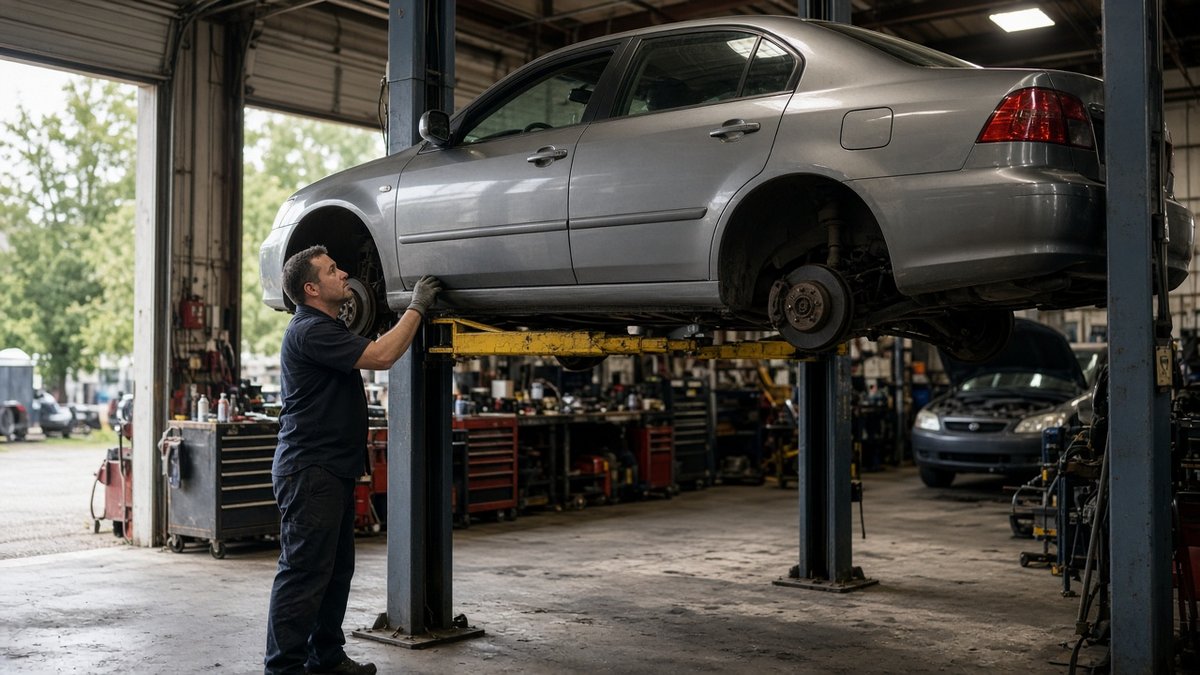
I've crawled under enough front ends to know the tells. Look for fresh welds or rivets on the support horns where they meet the rails, mismatched undercoating texture, overspray on the radiator or A/C lines, and headlight buckets that sit at different heights. Measure the gap from hood to fender on both sides with the hood closed. Uneven gaps after a front hit are a louder signal than anything the report says about "cosmetic repair."
What the report can and cannot tell you
CARFAX collects records from insurers, police, auctions, and reporting shops, as it explains on its vehicle history reports page. A front claim that triggered a structural or airbag notation may show the accident even when the parts list never names the support. A cash repair at a cut-rate shop after an unreported hit may show nothing. We break down that hole in unreported accidents on CARFAX. If you do see structural language, take it seriously and get a pre-purchase inspection that includes measuring the front rails, not just a quick look under the hood.
Honestly, people underprice this. A car with a clean title and a replaced radiator support can still track straight and pass a state inspection, then chew through tires or leave a headlight aim that never quite stays put. IIHS crash ratings in its vehicle ratings assume the structure is intact the way the car left the factory. A poorly sectioned support is not that car anymore, even if the paint looks fine.
How to inspect welds, gaps, and rails
Start with the easy stuff in daylight. Open the hood and sight across the upper tie bar or support. Factory stampings have consistent bead seams; a replacement often shows different weld nuggets, seam sealer that looks newer than the rest of the bay, or bolt-on aftermarket supports with obvious hardware. Check both lower rail tips behind the bumper beam if you can get the cover off or look through the grille opening. Pinch welds that look freshly painted, filler on a rail, or a kink just behind the support mount are walk-away signs for a lot of buyers.
Then check related panels. A support job rarely happens alone. Look at the fenders for paint mismatch, at the hood latch alignment, and at whether both headlights seat flush. Our notes on fender replacement on CARFAX and paint work on CARFAX help you read those panels. If parking sensors or a forward camera sit in the bumper or grille, verify they work on a test drive, because aim and mounting height change after front structure work. IIHS discusses why those systems need correct geometry in its advanced driver assistance topic page.
Buying steps that actually help
Ask straight out whether the radiator support, core support, or front clip was ever replaced, and ask for body-shop invoices if the seller claims a light hit. Pull the VIN yourself from the dash and door sticker. Do not trust a seller PDF; edited reports that drop a structural or front-impact line while leaving a rebuilt nose in the photos are a real risk. As of early October 2026, a CARFAX report through us runs about $5.50 as a guest or about $4.50 as a member, and a CARFAX plus AutoCheck bundle is about $6.75, against roughly $39.99 to $44.99 at retail; confirm the amount at checkout. Run NHTSA recalls for any front structure or airbag campaigns on that VIN, and at a dealer read the FTC Used Car Rule Buyers Guide for the warranty language. We're a licensed CARFAX and AutoCheck reseller, and we're not affiliated with CARFAX, AutoCheck, or Experian.



Comments (0)
No comments yet. Be the first to share your thoughts!
Log in to leave a comment.