
No. If an accident never reached one of CARFAX's sources, it won't be on the report, and AutoCheck has the same blind spot. A crash lands on a report when a police department, an insurer that shares data, a body shop or dealer, or an auction files something tied to the VIN. When two drivers settle a parking lot crunch in cash and the owner pays a local shop for the fender, there is often no record for either company to pick up. So a clean report only tells you what was filed, and the repair nobody filed is yours to find.
Where CARFAX accident records come from
Every accident row on a CARFAX report started as somebody else's paperwork. The CARFAX vehicle history reports page lists accident history, damage severity, point of impact, records of damage repair, airbag deployment, and structural damage, and says its database draws on more than 151,000 domestic and international sources. When we pulled that page on Wednesday afternoon, October 7, 2026, the FAQ still described a report as showing whether the car was in an accident reported to CARFAX. Those last four words carry the whole answer. Our post on what "accident reported" means on CARFAX covers how a row reads once a record arrives.
Insurers may matter less for small claims than you'd guess. When Repairer Driven News read CARFAX's data source page in 2020, it reported that the page credited insurers with total loss and stolen-vehicle data and did not mention repairable claims, while collision repair facilities were listed as a source for accident indicators. That page refused our fetch today, so treat it as a 2020 snapshot. AutoCheck runs its own database, and the two can disagree on the same car, which we cover in AutoCheck accident versus CARFAX severity.
Why some crashes never make the report
The plain reason is that nobody told anyone. Consumer Reports says history reports lean on data from insurers and police, and an owner may never report a crash to either, sometimes because there was no collision coverage and sometimes because they paid for the repair directly. An earlier Consumer Reports test from 2012 found reports were most often wrong on cars with serious damage that were never declared a total loss. Those wrecks can keep clean titles when there was no collision insurance or the damage fell under a state's total loss threshold.
State reporting rules leave plenty of room too. The California DMV requires an SR-1 within 10 days when anyone is injured or property damage tops $1,000, on top of any police or insurance report. A scraped bumper under that line, or a driver who simply skips the form, leaves the DMV with nothing, and we found no source saying SR-1 filings feed history companies anyway. Our list of what CARFAX doesn't show covers the other gaps.
Honestly, cash does not guarantee silence either. Repairer Driven News reported industry committee members saying even customer-pay test estimates, with no insurer involved, were still getting out to history companies, and the people quoted at that 2020 conference could not pin down how. So an unreported repair might surface later, or never.
How long the lag can run
Even a reported crash can take a while. Consumer Reports says it can take months for an incident to reach a history report, and by then the car may be fixed and sold again. That means the car you test drive this week could have a police report sitting in a queue somewhere. Our posts on how long an accident takes to show on CARFAX and police report to CARFAX timing go through each source's pace.
How to catch a repair nobody reported
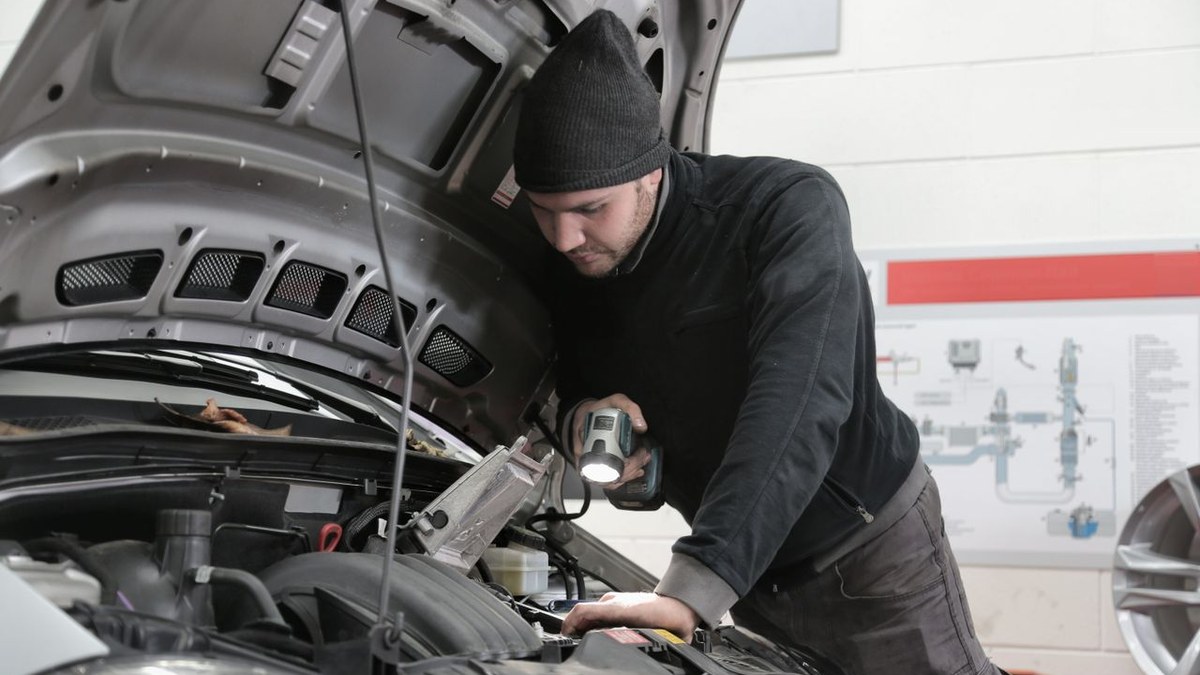
Start with daylight and a slow walk around the car. A buyer's guide hosted by the Virginia Motor Vehicle Dealer Board says to check that color matches across panels, that reflections do not ripple or break where two panels meet, and that gaps stay even top to bottom. It also flags overspray around engine bay seals, a front chin piece that looks too perfect for the miles, and newer bumper mounts or weld seams underneath. CR's hidden damage guide adds panels that look too new and electrical gremlins like flaky wipers or window switches.
A paint thickness gauge removes some guessing. Gauge maker DeFelsko says most factory paint reads 4 to 7 mils, that thicker readings often mean a repaint, and that the gauge counts every layer including filler. It also admits there is no single right number and some cars get repainted at the factory, so compare panels on the same car. A Hagerty buyer's guide says S2000 shoppers prize cars whose paint meter readings show no damage repair. Our paint work post goes deeper.
Then check parts that crash repairs replace. Read the small print in the corner of each window, since a pane from a different glass maker than the rest was likely replaced, for a rock chip or a crash. Watch the airbag light at startup, which should come on and then go out. NHTSA says deployed airbags have to be replaced, has found counterfeit bags in cars repaired after crashes, and warned in 2024 about cheap replacement inflators tied to at least three deaths. Look, a cheap cash crash repair is exactly where a fake airbag would hide. More in airbag deployment on CARFAX and frame damage on CARFAX.
Paperwork to ask for, and what a dealer has to say
Ask the seller straight out about any accident, reported or not, and ask for the repair invoice. A real invoice names the shop, the parts, and the VIN. The NICB VINCheck page says it checks for stolen cars that were never recovered and salvage or flood records from participating insurers, who write 92.49 percent of US premium per that page. It warns against relying on it alone, and since it checks only theft, salvage, and flood records, a minor repaired claim will not show there, as our NICB VINCheck versus CARFAX post explains.
At a dealer, the sticker on the window is about warranty terms. The FTC says every used car on a lot needs a Buyers Guide showing whether it comes with a warranty or sells as is, and that a history report may list accidents but will not replace an independent inspection. If the dealer won't allow an inspection, the FTC suggests going to another dealer. See our Buyers Guide explainer and when a dealer didn't disclose an accident.
Where the report still earns its money
Run your own report anyway, since the records that did get filed still count. In a 2013 CBS Boston I-Team story, a buyer said his dealer printed a clean CARFAX on a used BMW, and he learned at trade-in that AutoCheck listed frame damage. The I-Team found several more like it on that lot. A seller-supplied PDF is worse, since anyone can edit one, so read how to spot a fake CARFAX report before trusting it. Through us a CARFAX report runs about $5.50 as a guest, $4.50 for members, or $6.75 for the CARFAX and AutoCheck bundle, against roughly $39.99 to $44.99 retail, so confirm at checkout. We're a licensed CARFAX and AutoCheck reseller, not affiliated with CARFAX, AutoCheck, or Experian.
The inspection is where an unreported accident usually turns up. CR's chief mechanic John Ibbotson suggests a mechanic experienced in bodywork and accident repair, and our pre-purchase inspection cost guide covers the bill. If the gauge and the lift find a repair the seller never mentioned, use it in your price talk or leave. The CBS buyer found out at trade-in, and that is the expensive time to learn.
Sources
- CARFAX, Vehicle History Reports (accident data checklist and FAQ)
- Repairer Driven News, Source of auto body repair CARFAX leaks proves elusive (July 2020)
- Consumer Reports, Expert Steps to Buy a Used Car Without Costly Regrets
- Consumer Reports, Don't rely on used car history reports (December 2012)
- California DMV, Report of Traffic Accident Occurring in California (SR-1)
- Virginia Motor Vehicle Dealer Board, Stop Curbstoning used car buyer guide (PDF)
- Consumer Reports, How to Avoid Hidden Damage on a Used Car
- DeFelsko, How to Use Paint Thickness Gauges
- Hagerty, 2000 to 2009 Honda S2000 Buyer's Guide
- NHTSA, Air Bags
- National Insurance Crime Bureau, VINCheck
- FTC, Buying a Used Car From a Dealer
- CBS Boston, I-Team Exposes Major Flaw With Some Used Car Reports (November 2013)
Comments (0)
No comments yet. Be the first to share your thoughts!
Log in to leave a comment.