
CARFAX won't normally list a rocker panel replacement, because the report records events like accidents and claims rather than which body parts got cut out and welded in. You might see the side impact that crushed a rocker if it was reported through insurance, police, or an auction, but a rocker replaced for rust at an independent shop or in somebody's garage usually leaves the report blank.
The rocker panel is the strip of body under the doors, between the front and rear wheel openings. On most modern unibody cars it's part of the body structure, and it helps carry loads in a side crash, so a replacement there is a bigger deal than a bolt-on part. In salt-belt states rockers are one of the first places rust eats through, which is why patch panels and slip-on rocker covers are sold everywhere. That means a replaced rocker usually points to one of three histories: rust, a side hit, or damage from somebody jacking the car in the wrong spot.
Rust repair is the big blind spot
Rust repair is the most common reason for a new rocker and the least likely to appear on a report. CARFAX describes its data sources, including DMVs, insurers, police, auctions, and service shops, on its vehicle history reports page, and rust work paid in cash at a small body shop doesn't typically flow into any of them. Insurers generally don't pay for rust either, so there's no claim to record. We cover what the report can and can't say about corrosion in does CARFAX show rust. The short version is that you have to get under the car, because the report won't do it for you.
How to check a rocker in person
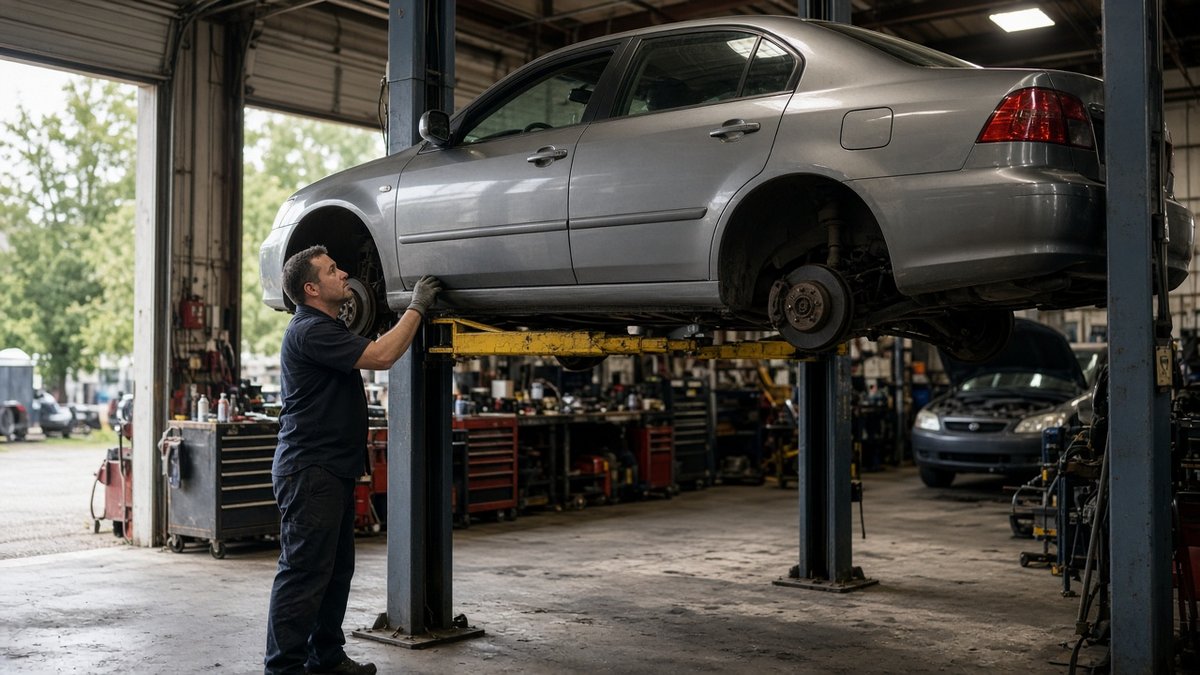
Get low with a flashlight and look along the pinch weld, the seam running under the rocker where a lift or jack is supposed to go. Crushed or folded pinch welds are common and often just mean careless jacking, but fresh undercoating sprayed thick over one section, when the rest of the underside is bare, is a reason to look closer. Check for weld beads or grinder marks where the rocker meets the door pillars and the wheel openings. Open each door and look at the sill area for seam sealer that looks wavy, hand-applied, or a different color from the factory bead. If the car has plastic rocker covers or side skirts, ask whether you can see under them, since covers are great at hiding rot.
A small fridge magnet wrapped in a cloth is a decent cheap test. It should grab steel all along the rocker; if it gets weak or falls off in one area, there could be thick body filler there. Tap the panel lightly with a knuckle too, and listen for a dull spot. None of this replaces a lift inspection, but it'll tell you whether you need one. Honestly, if you find bubbling paint at the bottom of the rocker on a car with a clean report, assume the rust under it is worse than what you can see.
When it was a side hit instead
A rocker damaged in a side impact usually brings other damage with it, and that's what may get reported. A hit at the bottom of the door, or a slide into a curb, can push the rocker in and tweak the door openings. Open and close every door and watch the gaps; a door that has to be slammed or sits proud of the body points to the structure around it. Our guide to door replacement on CARFAX covers those signs, and quarter panel replacement on CARFAX covers the rear end of the same side. If the rocker repair runs into the B-pillar or the floor, read frame damage on CARFAX before you go any further. If you want a sense of how side structure matters in a crash, IIHS publishes crash test results on its ratings page.
What to ask, and what to do next
So ask the seller plainly: was this rocker replaced, and was it rust or an accident? Ask who did the work, whether it was a full panel welded in or a patch, and whether there are photos or a receipt. A shop that did real rust work can usually tell you how far the rot went. If the seller only says "it was touched up" and the magnet test says filler, trust the magnet.
Look, the risk with rockers is sneaky. A rocker can look fine, the report can be clean, and you can still be buying a car with a side hit nobody reported or rust packed with filler. A seller-supplied PDF won't change that, and it could be edited anyway, so run the VIN yourself from the dash and the door jamb. As of mid-October 2026, a CARFAX report through us is about $5.50 as a guest, about $4.50 as a member, or about $6.75 for a CARFAX plus AutoCheck bundle, against roughly $39.99 to $44.99 at retail. Confirm the price at checkout, since it changes. Then check NHTSA's recall lookup with the same VIN, read the FTC Buyers Guide sticker if you're at a dealer, and get the car on a lift at an independent shop; AAA's approved repair network is one way to find one. We're a licensed CARFAX and AutoCheck reseller, and we're not affiliated with CARFAX, AutoCheck, or Experian.



Comments (0)
No comments yet. Be the first to share your thoughts!
Log in to leave a comment.