
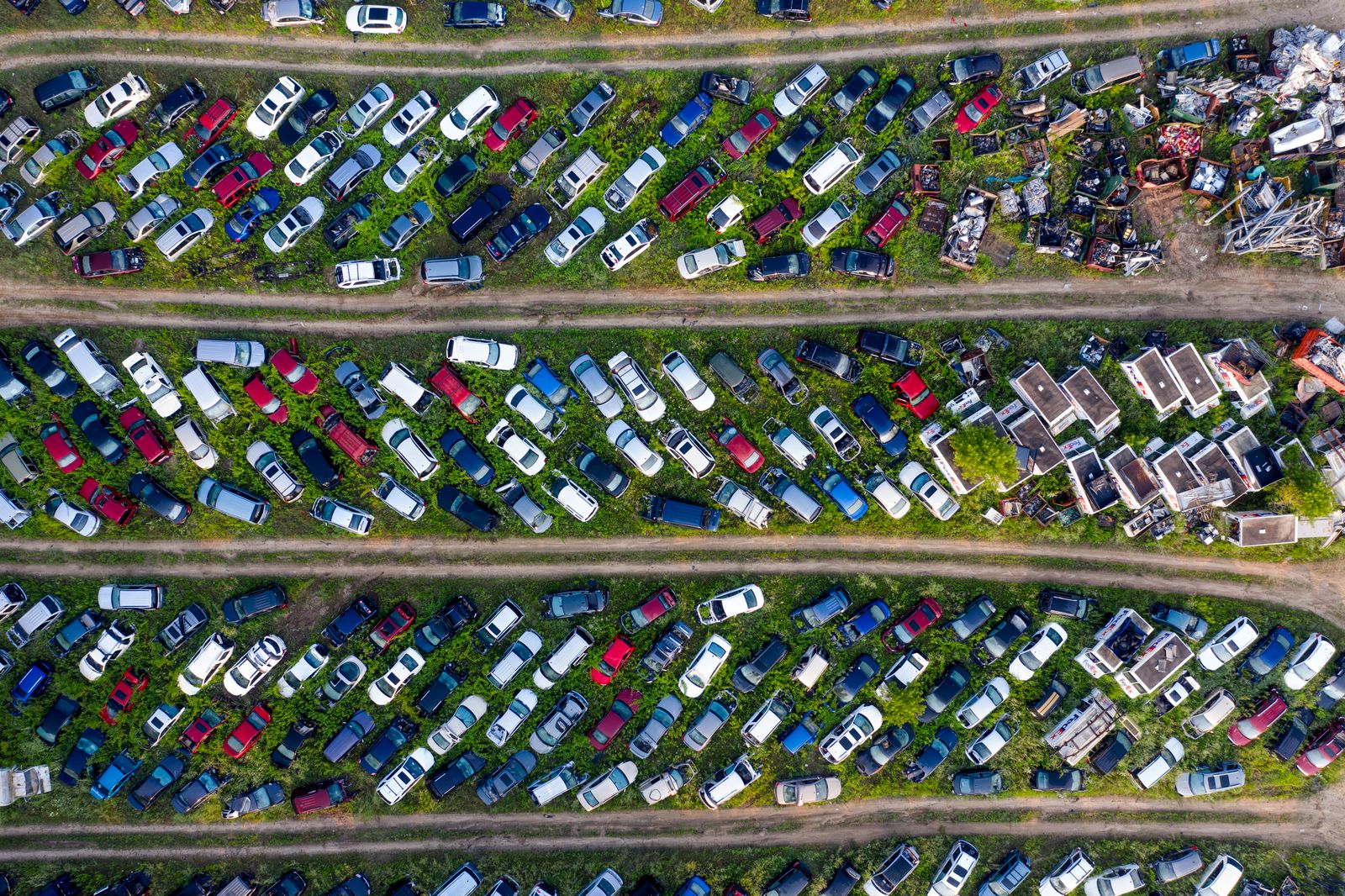
Non-repairable and salvage are not synonyms. In California, a nonrepairable certificate is an ownership document for vehicles treated as parts or scrap — and once declared nonrepairable, the vehicle cannot be titled or reregistered for road use. Salvage can still have a rebuild path. Sellers blur that line on purpose.
Late September 2026 retail singles still get quoted around $39.99–$44.99 depending on the brand cart (confirm at checkout). Through our licensed reseller checkout, guest reports are about $5.50, member about $4.50, and the CARFAX+AutoCheck bundle about $6.75; credit packs often start near $3. Confirm before you pay. We resell official reports and are not affiliated with CARFAX, AutoCheck, or Experian.
California DMV definitions draw the hard edge: nonrepairable covers surgical strips after theft recovery, complete burns, or owner-declared parts/scrap vehicles. Total-loss salvage covers wrecked or damaged vehicles considered uneconomical to repair. Different forms, different futures. Texas maps nonrepairable titles issued on or after September 1, 2003 to NMVTIS "Junk," while salvage maps to salvage brands. If a seller says "non-repairable salvage" like it's one rebuildable package, make them pick a word.
Why the distinction matters for money
Look: salvage inventory sometimes becomes rebuilt after state inspection rules. Non-repairable / junk-class inventory is generally scrap or parts economics. Bidding daily-driver money into a non-repairable certificate is how people fund someone else's parts yard. Pair junk vs salvage, what a junk title means, and salvage vs rebuilt before you negotiate.
NMVTIS consumer guidance exists because brands are supposed to travel with the VIN even when paper titles get creative across state lines. A non-repairable or junk designation that "disappears" in listing copy is a red flag, not a bargain. We've pulled reports where marketplace headlines said salvage-rebuildable while federal brand history read closer to junk intent.
Honestly, state vocabulary drifts. One state's "non-repairable" stamp can map closer to junk even when a seller keeps saying salvage because salvage sounds rebuildable at the barbecue. Read the actual brand string on the title and on NMVTIS, not the nickname in the ad.
Checklist before you bid or wire
- Confirm the exact certificate or brand: salvage vs nonrepairable/junk.
- Pull CARFAX + AutoCheck same day — guest ~$5.50 / member ~$4.50 / bundle ~$6.75; confirm checkout; retail often $39.99–$44.99.
- Check NMVTIS brand history for prior junk/salvage labels.
- Ask whether your destination state will even accept a rebuild path for this VIN.
- Price parts-or-scrap economics honestly if the brand is non-repairable.
Here's the catch. Auction announcements and private ads both recycle optimistic language. Blunt risk: "light salvage" marketing on a VIN that carries non-repairable or junk brands. Fake PDFs and cropped screenshots show up in those threads. Live pull. Live eyes. Related: washed titles and CARFAX, Ohio salvage→rebuilt path, and NMVTIS vs CARFAX.
We've seen buyers treat this like trivia night. It is a registration-future question. If your state will never put plates on a non-repairable certificate, your "deal" is a trailer and a torch. Write the brand on your notes before you talk price. If the seller talks over the brand, exit.
When flood or fire is in the mix, overweight moisture and structural inspection even if someone promises a light salvage. Water and electrical systems do not care about optimistic nicknames. One report from cheapcarfaxautocheck.com will not rebuild a non-repairable shell for you — but it will stop you from paying project-car money for scrap-labeled inventory.
Late September 2026 auction seasons still mix rebuildable salvage with non-repairable certificates in the same photo grids. Sleep on any VIN where the listing and the brand list disagree. Confirm checkout totals, then let the paper argue with the seller.
California's REG 488C path also reminds owners who retain nonrepairable vehicles after a total-loss settlement that they must apply for the nonrepairable certificate and surrender plates — and that the vehicle may not be titled or registered for highway use. That is not a rebuild checklist. It is a parts-or-scrap checklist. If a Facebook ad shows a nonrepairable certificate and a "runs and drives" claim aimed at daily commuting, the ad is selling fantasy registration.
Texas's conversion chart is useful even if you never buy in Texas, because it shows how state vocabulary lands in the federal brand set shoppers actually search. Nonrepairable titles issued on or after September 1, 2003 map to Junk in NMVTIS. Older nonrepairable titles can map differently. Salvage titles map to salvage brands. When a seller waves a photocopy and says "it's basically salvage," ask which NMVTIS brand the VIN carries today — then pull the report yourself instead of arguing about nicknames.
Auction announcements sometimes say "non-rebuildable" or "parts only" while a private flipper later rewrites the pitch as salvage-rebuildable. Compare lane notes, title face, and commercial report brands before you wire a deposit. If any one of those three says non-repairable or junk, price scrap economics. Do not invent a rebuilt path because the headlights still turn on.

Comments (0)
No comments yet. Be the first to share your thoughts!
Log in to leave a comment.