
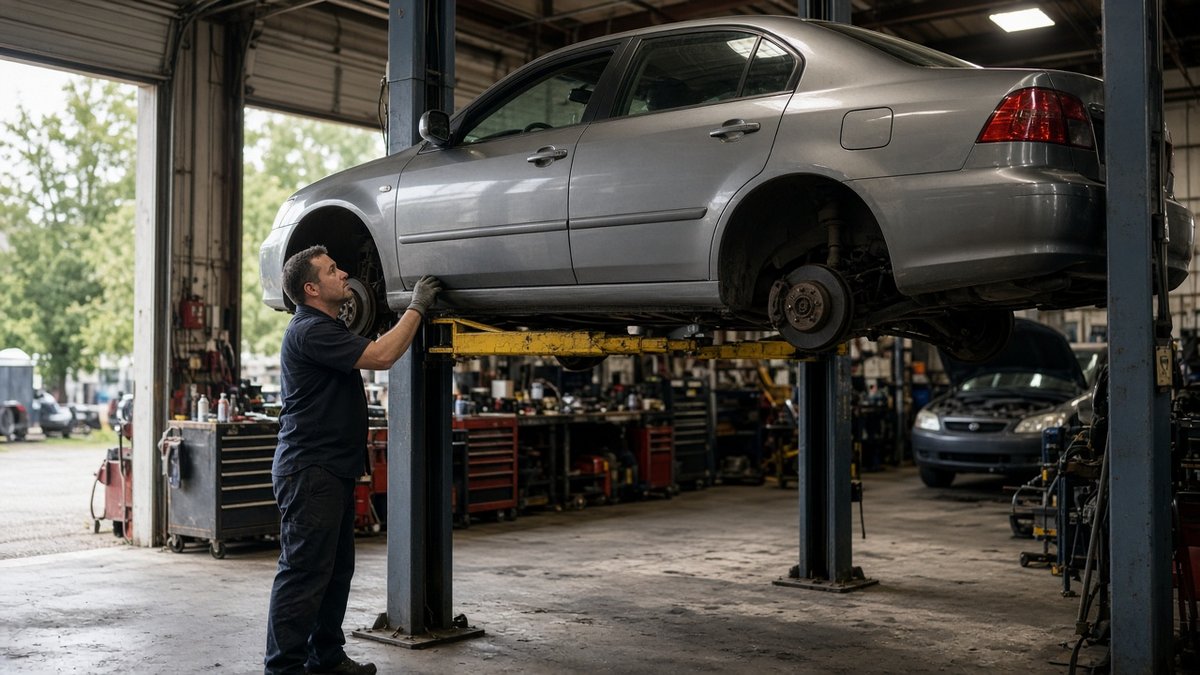
Salesman shrugs at “structural damage” on the CARFAX and says it’s just dings. You’re supposed to nod like that makes sense.
Look: it doesn’t. We’ve watched that line get waved off as cosmetic more times than I can count — and then an independent shop finds weld repairs, rocker work, or a trunk floor that took a hit. Structural on a CARFAX is about where the damage sat, not how pretty the paint looks now.
As of mid-September 2026, a single retail CARFAX still lands around $39.99–$44.99 depending on which checkout you hit (sources still disagree — confirm before you argue pennies). Guest checkout here is $5.50 for the same official document; members pay $4.50. Paying less doesn’t invent a frame flag. Paying retail doesn’t scrub one either.
What “structural damage” usually means
In plain English: a source in the network — often an auction inspection, insurer, or body-shop feed — reported damage to a part that holds the car together. Think unibody rails, rocker panels, apron, trunk floor, inner wheelhouse. Bolted-on bumpers and fenders are a different conversation.
Here’s the catch. Severity and location get mashed together in the lot. A low-speed parking barrier can crease a rocker and still trip the structural label. So can a harder hit that needed welded panels. Same badge. Different cars. The report starts the argument; a lift inspection finishes it.
Honestly, if the seller’s whole pitch is “Carfax overreacts,” ask for repair invoices with dates that match the event row. No paper, no shrug.
Structural damage vs accident reported
- Accident reported is usually a police or insurance incident flag — something got filed against the VIN.
- Structural damage points at a structural component (or a structural repair announcement from auction) — location matters more than the word “accident.”
- You can see accident without structural, structural without a soft accident line, or both stacked on the same date.
- Neither line is a mechanic’s verdict on whether the car tracks straight today.
So don’t let a dealer collapse them into “just a ding.” Word games are free. Panel gaps aren’t.
Why dealers soft-pedal it
Resale. A permanent structural note on a vehicle history report is a discount magnet — buyers walk, lenders get picky, trade-ins get hammered. We’ve seen lots price these cars like the badge is invisible, then act surprised when you ask for the auction announcement language.
Blunt risk: if you buy on the lot story alone and skip a pre-purchase inspection on a lift, you’re betting the salesman is a better structural engineer than the auction inspector who flagged it. That’s a bad bet.
What to read after the structural line
Don’t stop at the yellow text. Walk the timeline.
- Date and odometer next to the structural or damage row — does mileage jump weirdly around it?
- Whether the same date shows accident, airbag, towing, or “disabling” notes
- Later body-shop or auction entries that line up (or don’t)
- Title brands after that date — salvage / rebuilt / flood are a different severity tier (see rebuilt title on a CARFAX)
- Whether AutoCheck shows a harder auction damage call than the CARFAX soft-pedals — we’ve seen that split on the same VIN
A “clean” current title under an older structural note is common. Title brands are the nuclear flags. Structural rows are the everyday ones that still deserve a shop with a measuring system, not a flashlight in the parking lot.
The fake-PDF problem sits next to this too
Sellers love cropped screenshots that stop before the ugly row, or older PDFs that pre-date a later auction announcement. A screenshot is not a fresh pull on the VIN stamped on the dash and door jamb.
Pull your own. How we check authenticity is in how to verify a real CARFAX or AutoCheck PDF. Private-party deals get messier — same VIN/title/ID drill as CARFAX for private party sales.
Should you still buy it?
Maybe. Structural doesn’t automatically mean walk away — it means price it like the repair happened and the resale hit is real. Ask for the auction announcement wording if one exists. Get a shop that measures, not just eyeballs. If the discount doesn’t cover the risk, leave the keys on the desk.
We’ve seen buyers treat the badge like a temporary sticker. It isn’t. The next buyer’s lender will still see it in 2026, and so will the next history pull.
How we treat it before money moves
Run your own report — not the seller’s PDF. Match the VIN on the car. Read the structural row with the date, then get an independent inspection that can check frame/unibody geometry. If the seller won’t allow that, walk. No essay needed.
For the triage order we use on the whole document, see how to read a CARFAX report. And remember the opposite problem still exists: plenty of real structural hits never get reported at all — covered in what CARFAX doesn’t show.


Comments (0)
No comments yet. Be the first to share your thoughts!
Log in to leave a comment.