
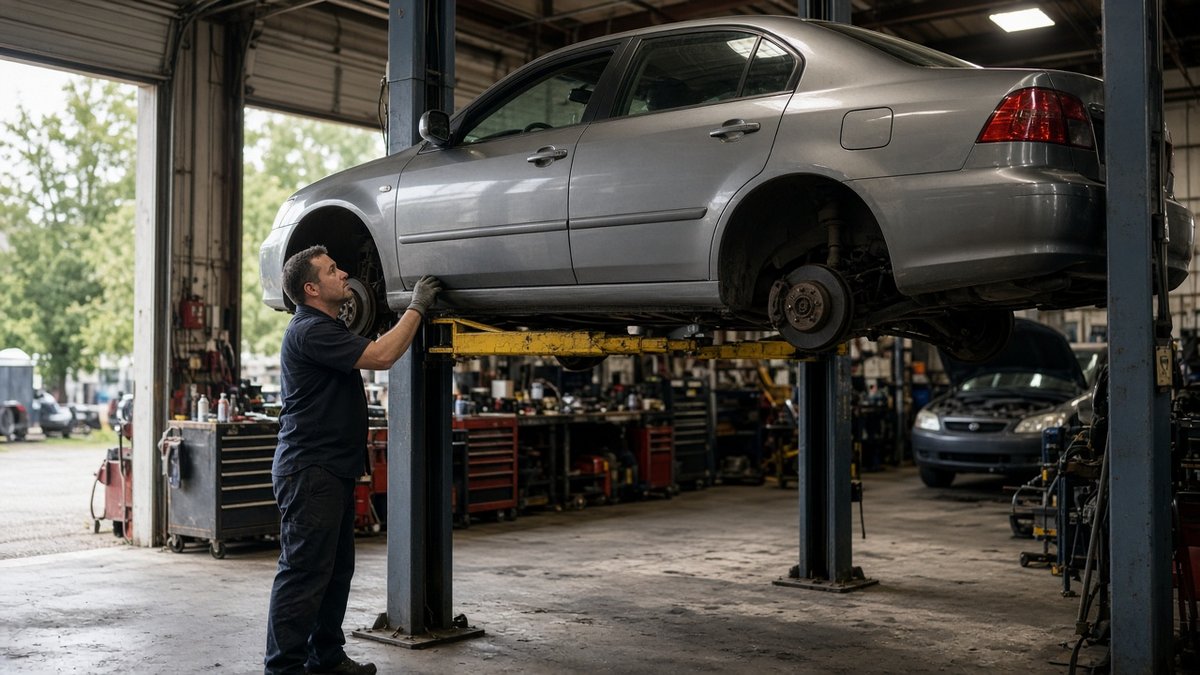
CARFAX can show a fuel injector replacement, but only when the dealer or shop that did the work reports service records, so a missing line does not prove the injectors are original. When the entry does show up, it is a useful clue: one injector on a high-mileage engine is normal wear, while a full set, repeat injector visits, or injectors logged right before the car was listed usually mean the engine had a misfire, rough idle, or fuel smell someone wanted gone.
It's early October 2026, and the used lots are filling with trade-ins from people who bought new over the summer. A lot of those cars have a tidy service history with one odd line in the middle, and injector work is one we see buyers skip past because it sounds minor. Sometimes it is minor. Sometimes it is the only paper trail left of a problem that never quite got fixed, so it's worth a few minutes before you hand over a deposit.
How injector work lands on a CARFAX report
An injector replacement appears only when a business that shares data with CARFAX logs it. CARFAX says its vehicle history reports draw on many sources, including service and repair shops, and it does not claim to capture every repair. Franchise dealers and big chains tend to report. A cash job at a small independent shop often doesn't, and a driveway swap never will. On a lot of port-injected engines, an injector is a bolt-on part that a handy owner can change in an afternoon, so plenty of injector history simply isn't recorded anywhere. Direct-injection engines are different, since the injectors sit in the cylinder head under high pressure and the job is usually done by a shop, which makes a reported line more likely on those cars.
What the wording usually means
The text on the report is whatever the shop typed, which means you get anything from "fuel injector replaced" to "performed injector service" to a long dealer line with a part number. Those are not the same thing. An injector cleaning or fuel system service is routine upsell maintenance and tells you very little. A replacement of one injector usually follows a misfire code on a single cylinder. A replacement of all injectors at once is a bigger deal, because shops generally do that when several cylinders were acting up, when the fuel was contaminated, or when a manufacturer bulletin or recall called for it. If the line mentions a cylinder number or a misfire code, that's a gift; write it down.
When the line should make you slow down
Injector entries deserve a closer look in a few patterns. Repeat visits for the same complaint within a year or two suggest the injector was a symptom and the real cause, maybe a wiring issue, low fuel pressure, or carbon buildup, was never solved. Injectors replaced together with spark plugs, coils, and an oxygen sensor in the same visit can mean the engine ran badly long enough to damage other parts, and that's when the catalytic converter becomes the expensive question. A fresh injector job a week or two before the car was listed is the one I'd ask the seller about directly. Honestly, a seller who fixed a real problem will usually tell you what happened and hand you the invoice. One who gets vague is giving you an answer too.
Flood history is the other trap. Water and silt in a fuel system can corrode injectors and connectors, and we've written about how that shows up in flood-damaged fuel injectors. A car with injector work, a fuel pump replacement, and a title transfer from a storm state in the same stretch deserves a hard look for a washed title, no matter how clean the interior smells.
Check for recalls before you assume the worst
Some injector replacements are recall or warranty work, which is actually reassuring because the fix was done to a known standard at no cost to the owner. Run the VIN through NHTSA's recall lookup and see whether any fuel system campaigns apply to that car. If a recall exists and the CARFAX line lines up with a dealer visit around the same time, you've probably found the explanation. If a recall exists and there's no matching dealer entry, ask whether the work was ever done, because an open fuel recall is something you want handled before you drive the car home, not after.
What to check on the car itself
Paper only gets you so far, so pair the report with a test drive and a scan. Start the engine cold and listen for a rough or shaky idle that smooths out once it warms. Watch for a flashing check engine light under acceleration, which typically points to an active misfire. Smell around the engine bay for raw fuel after it has run. A cheap OBD-II scanner, or any parts store that reads codes for free, will show stored or pending misfire codes even if someone cleared the light the morning you showed up. Poor fuel economy is another hint; the government's fuel economy maintenance tips note that a poorly running engine burns more fuel, so if the trip computer reads well below the official rating for that model, ask why. And if you're paying dealer money, a pre-purchase inspection from an independent mechanic is cheap next to a set of direct-injection injectors, which on some engines runs well into four figures once labor is included. Get a written quote for that specific engine instead of trusting a number you read online.
Where a cheap report fits
A history report is how you find the injector line in the first place, along with ownership changes, title brands, and accident records that change how you read it. We're a licensed CARFAX and AutoCheck reseller, not affiliated with CARFAX, AutoCheck, or Experian. Our prices sit around $5.50 for a guest report, about $4.50 for members, and roughly $6.75 for a bundle with both, compared with the $39.99 to $44.99 retail range CARFAX has listed for a single report; confirm the current number at checkout, since both sides change prices. What you should avoid is a seller-supplied PDF. We've seen edited ones with service lines removed, and a "free full CARFAX" offer that turns into a monthly subscription is a trap you only fall into once. Pull your own report on the VIN you see stamped on the car.
If injector work turns up alongside other engine entries, our guide to what CARFAX shows about mechanical problems covers the limits of service data in general, and the spark plug post helps when plugs and injectors were done in the same visit.
Comments (0)
No comments yet. Be the first to share your thoughts!
Log in to leave a comment.