
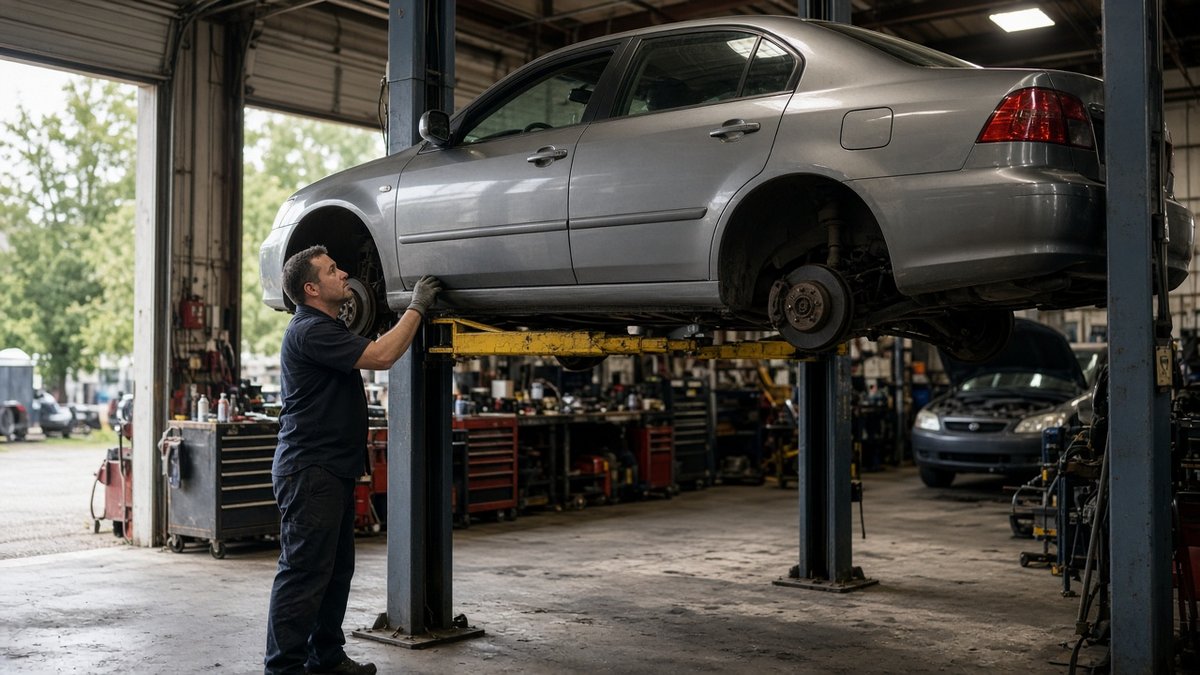
CARFAX can show differential repair and diff fluid service, but only when the dealer or shop that did the work reports its service records, so plenty of rear end jobs never appear. If you do see a line like "differential serviced" or "rear differential replaced," the wording tells you a lot: a gear oil change at a sensible mileage is routine upkeep, while a rebuilt or replaced rear end on a truck that tows, or a repeat noise complaint, deserves a hard look before you pay.
It's mid-October 2026, and people are lining up used 4x4s and AWD crossovers before snow, often ignoring the differential. So treat the report as a map of what was logged, then confirm the rest under the vehicle and on the road.
How differential work gets onto a CARFAX report
A differential entry shows up when the business that did the job shares data with CARFAX. CARFAX describes its vehicle history reports as built from sources such as service shops, dealers, and state agencies, and it's upfront that not every event gets reported. Franchise dealers and the big quick-lube chains tend to report.
The words on the line matter more than whether a line exists. "Differential fluid changed," "rear axle serviced," or "front and rear differential service" usually means a drain and refill. "Differential replaced," "axle assembly replaced," or "pinion seal replaced" points to actual repair.
What a diff fluid service line actually tells you
A diff fluid service line mostly tells you somebody was doing the boring maintenance, which is a good sign. RepairPal's estimate for a drive axle drain and refill runs about $144 to $179 nationally (their page was last updated in September 2026),, so treat it as a benchmark. And on some front-wheel-drive and AWD vehicles the front differential shares fluid with the transmission, so that service may show up as a transmission fluid line instead.
So if an AWD report shows only transmission service, the front diff may have been in that job; our guide on whether CARFAX shows transmission fluid changes walks through how those lines read.
When a rear end repair line should slow you down
A replaced or rebuilt differential deserves questions, mostly about why it failed. Honestly, gear sets wear out from low fluid, heavy towing, mismatched tire sizes on 4WD and AWD systems, or plain age, and the cause tells you whether the problem is fixed or just waiting to come back. A rear end swapped for a used junkyard unit, with no paperwork, is a gamble that the seller has quietly handed to you.
Watch for patterns over single entries. Two differential lines within a short mileage span, a pinion seal replaced and then a differential replaced a few thousand miles later are all worth asking about. If the repair overlaps with axle shafts or bearings, read our posts on wheel bearing replacement and CV axle replacement, because shops sometimes log a noise complaint under the wrong component until they find it.
Recalls on axles and differentials
Driveline recalls are real and they show up differently from repair records. Ford's NHTSA recall 25V512 covers certain 2023 to 2025 F-150 trucks with the 9.75-inch heavy-duty axle, where rear axle hub bolts can break and hub splines can strip; per the filing, that can let the truck roll in park without the parking brake or lose drive power. If you're shopping a late-model F-150 with the max tow package, check the VIN on NHTSA's lookup and ask for the dealer repair order, since CARFAX may list the recall as open or closed depending on what was reported. We cover that gap in open recalls on CARFAX.
What kind of differential you're dealing with
The type of differential changes what normal service looks like. Car and Driver's rundown of differential types explains open, locking, limited-slip, electronically controlled, and torque-vectoring diffs. Limited-slip units can need a friction modifier in the gear oil, and if the wrong fluid goes in you can get chatter in tight turns. So a "differential serviced" line on a performance car or an off-road trim with lockers matters more than the same line on a basic rear-drive sedan.
How to check the rear end yourself
You can learn more in ten minutes under the car than from any report line. Look at the differential cover and pinion seal for wet gear oil or a fresh coating of grime stuck to oil. Listen for a whine that rises and falls with speed, a howl when you let off the gas, or a clunk when you shift from drive to reverse.
- Ask for invoices that name the differential, the fluid type, and the mileage.
- On 4WD and AWD vehicles, check that all four tires are the same brand and size, and worn about evenly.
- Have a mechanic pull the fill plug and look at the fluid and the magnetic drain plug if there is one.
Metal flakes in the fluid, a pinion seal that's been leaking for a while, or a growl that gets louder with speed all point to repair costs well beyond a fluid change. Combine what you find with the broader picture in what CARFAX shows about mechanical problems, and if the drivetrain history includes a gearbox swap too, see transmission replacement on CARFAX.
Getting the report without overpaying
Pull a real report for the VIN yourself, and don't trust a PDF the seller emails over, because fake and edited reports are out there and a doctored service history is easy to make. We're a licensed CARFAX and AutoCheck reseller, not affiliated with CARFAX, AutoCheck, or Experian. Our prices have been around $5.50 as a guest, $4.50 for members, and $6.75 for a CARFAX and AutoCheck bundle, while retail often runs about $39.99 to $44.99; confirm the current price at checkout because it changes. Look, a report costs less than the gear oil, so run it before you spend an afternoon driving out to see the truck.
Comments (0)
No comments yet. Be the first to share your thoughts!
Log in to leave a comment.