
CARFAX shows a wheel bearing replacement only when the shop that did it reports service records, so plenty of bearing jobs never show up. When one does appear, it's usually just wear, but a bearing replaced alongside tires, an alignment, or suspension parts on one corner can point to a hard curb or pothole hit, and a bearing replaced on a car with a flood history deserves a closer look.
We're writing this in early October 2026, after a run of posts on suspension repair records and alignment records. Wheel bearings sit in the same corner of the car, and they come up a lot when people ask us whether a noisy used car is worth it. The bearing itself is a fairly ordinary repair. What you want to know is why it failed, and whether the same thing that killed it also hurt the parts around it.
How a bearing job gets onto the report
A wheel bearing replacement reaches CARFAX through the service-record feed, the same way oil changes and brake jobs do. The CARFAX vehicle history report page lists service history as its own section next to accidents, title brands, and odometer readings. Dealers and big chains that share data tend to send a short line like "front wheel bearing/hub replaced" with a date and mileage. Small independent shops often send nothing, so a blank service history doesn't prove the bearings are original. Honestly, the wording is the bigger headache, since "wheel hub assembly replaced" and "front end inspected" can both cover the same visit.
What a bearing row can hint at
Most bearings fail from age and miles, and a single replacement at 110,000 miles is about as boring as a record gets. Kelley Blue Book's wheel bearing replacement guide says bearings have no set replacement schedule but can be damaged by hitting a pothole, clipping a curb, or taking a speed bump too fast. So look at what else happened on that date. If the same visit lists one tire, an alignment, and a tie rod or control arm on the same side, that's a corner that took a hit. If there's no accident listed and the parts trail keeps pointing at one wheel, read our post on unreported accidents on CARFAX, because a cash curb repair can leave nothing but service rows behind.
Water is the other cause worth thinking about. KBB notes that water, mud, road salt, or sand can contaminate the grease inside the hub and wear the bearings out. One bearing on a high-mileage car in a snow state isn't alarming. Several bearings replaced in a short window, plus an ABS light that keeps coming back, on a car that came from a hurricane area is a pattern we'd want a mechanic to explain. Flood cars can be cleaned up and resold with a clean-looking report if the water damage was never claimed, which is exactly the title-wash risk a report can miss.
What the job costs, so you can judge the seller
Prices depend on the car and on whether it uses a bolt-on hub or a press-in bearing. RepairPal's wheel bearing replacement estimate puts the average between $346 and $504, with labor around $226 to $331, and KBB cites a national average of about $350 per wheel, with luxury brands costing more. Your local shop could land outside that range. So if a seller says "it just needs a bearing" and knocks $1,500 off the price, the math doesn't match the repair, and something else may be wrong.
Free checks you can do on the test drive
A bad bearing usually announces itself if you know what to listen for. RepairPal describes it as a rumbling noise that can show up above about 15 mph and get louder in turns, and KBB lists humming, growling, wheel wobble, steering vibration, pulling, uneven tire wear, and ABS trouble as warning signs. On a quiet road, get up to 40 or 50 mph and listen for a hum that rises with speed rather than engine revs. Then make a few gentle lane changes, because shifting the weight side to side tends to make a bad bearing louder or quieter. Afterward, look at the tires for odd wear on one corner, which also ties back to our notes on tire replacement records.
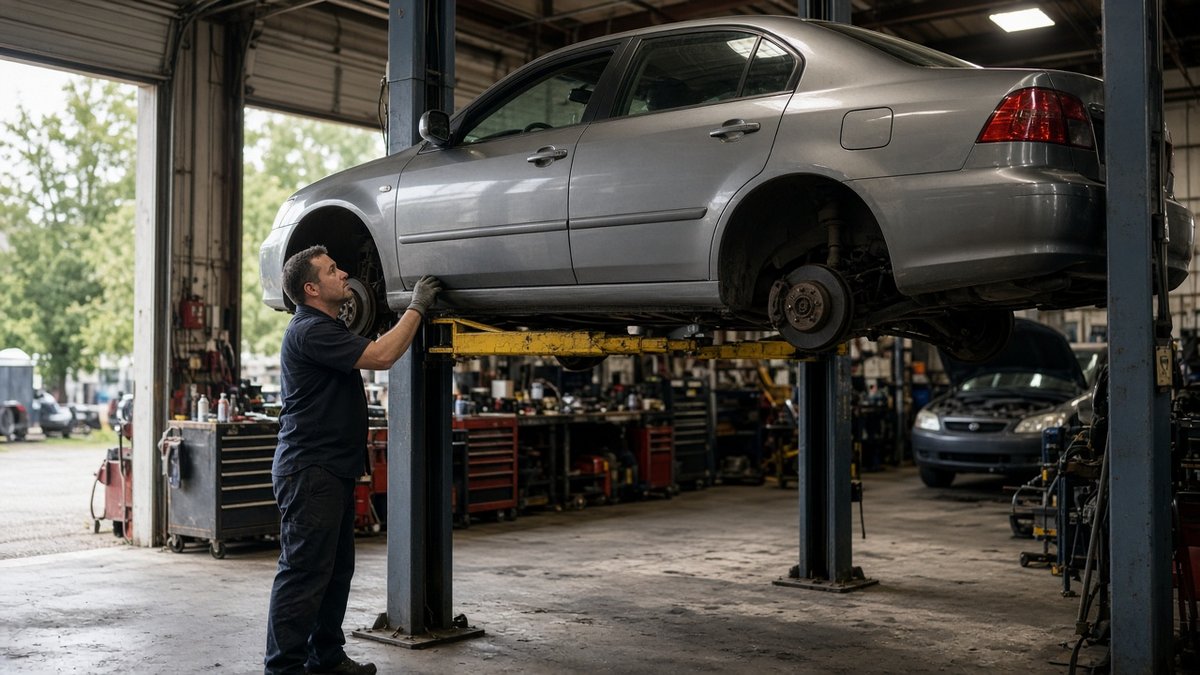
If you can get the car on a lift, rock each wheel by hand at the top and bottom. RepairPal says techs check for play this way, and if the wheel moves while the steering and suspension parts are fine, the bearing is the likely culprit. Don't let a seller wave this off. KBB points out that a failed bearing can, in the worst case, let a wheel come off, so this isn't a noise to live with on a car you just bought.
Pulling the report without paying retail
You don't need full retail to see those service rows. CARFAX's own single-report price has been running somewhere around $39.99 to $44.99, and sources still disagree on the exact figure, so check it yourself. As a licensed CARFAX and AutoCheck reseller (not affiliated with CARFAX, AutoCheck, or Experian), we sell guest reports around $5.50, member reports around $4.50, and a CARFAX plus AutoCheck bundle around $6.75, but confirm the price at checkout. One blunt warning: if a seller sends you a PDF "report" instead of letting you run the VIN yourself, assume it could be edited. Our guide to spotting a fake CARFAX report covers the tells.
So read the bearing row with the rest of that visit, check the accident section, and do the lane-change test. If the report, the tires, and the noise all tell the same story, you're probably looking at normal wear. If they don't, pay for a pre-purchase inspection before you pay the seller.
Comments (0)
No comments yet. Be the first to share your thoughts!
Log in to leave a comment.