
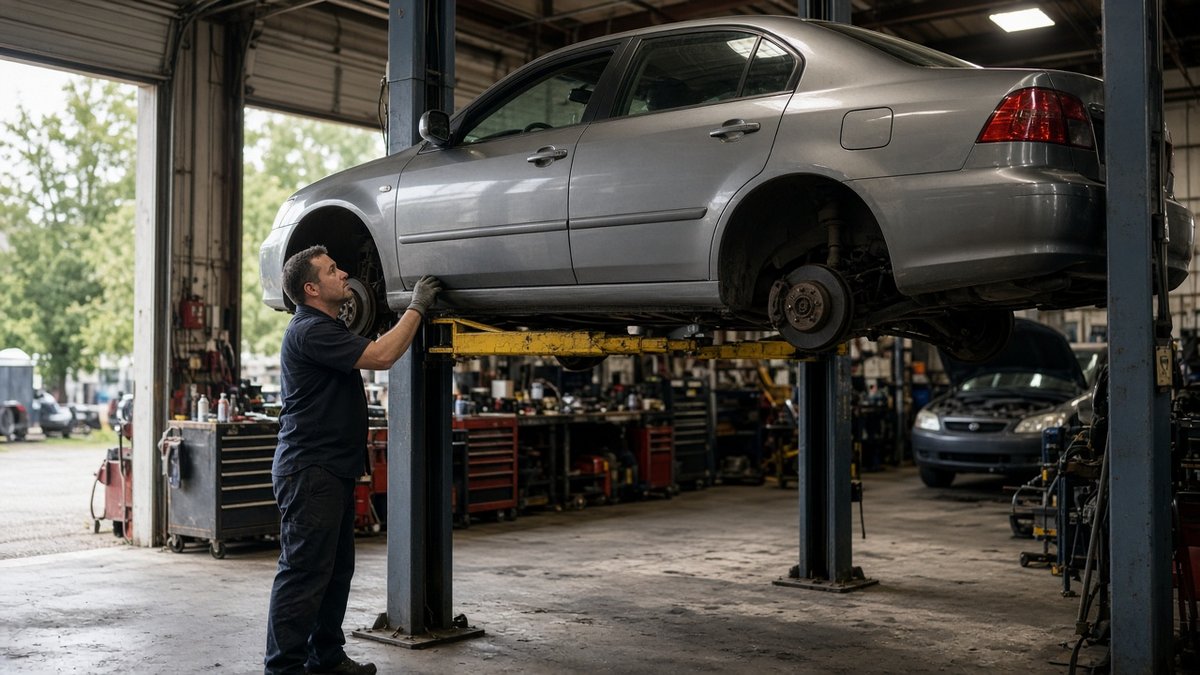
CARFAX shows exhaust or muffler work only when the shop that did it reports service records, so plenty of exhaust jobs never appear at all. When a line does show up, the useful part is where on the system the work happened: a new muffler at the back is usually routine rust, while repeated work up front near the manifold, or anything that hints the emissions parts were removed, deserves a closer look before you pay.
We're putting this together in early October 2026, right after a run of posts on other repair lines, because exhaust is one of those categories people panic about for the wrong reasons. A muffler replaced at 120,000 miles on a car from a salt state tells you almost nothing bad. An "exhaust leak repaired" entry three times in two years tells you a lot more. So treat the line as a clue about where to look, not as a verdict.
How exhaust work gets onto a CARFAX report
A repair shows up on CARFAX when the shop's management system shares service data with CARFAX; CARFAX describes its reports as built from records sent by sources like service shops, dealers, and state agencies, and it says plainly on its vehicle history reports page that not every event gets reported. Chain service centers and dealers report a lot. A small independent muffler shop or a friend with a welder usually reports nothing. That means an empty exhaust history is normal and proves nothing either way. Honestly, the absence of a line is the most common result you'll see, and it should push you toward an inspection, not toward relief.
When an entry does appear, it's usually short: "exhaust system checked," "muffler replaced," "exhaust leak repaired," or sometimes a catalytic converter line. If you see the converter mentioned, read our separate post on whether CARFAX shows catalytic converter replacement, because theft and emissions failures make that part its own story.
What a muffler or pipe line usually means
Most rear exhaust repairs are wear and rust, and that's mostly a cost question rather than a safety red flag. In a November 2024 column for Boston.com, AAA Northeast's Car Doctor, John Paul, priced factory parts for an older Chevy Cobalt at about $600 for the muffler and $800 for the pipe, said aftermarket parts can cut that by 50 percent or more, and put labor at roughly two hours with shop rates running $120 to $265 an hour (Boston.com Car Doctor). Your car and your town will land somewhere else, so get a real quote. If the report shows a recent muffler job, that's arguably a small plus: somebody already paid for it.
Where it gets more interesting is a pattern. Repeated exhaust repairs on a young car can point to hanger or mount damage from an impact, a car that sat in water, or a cheap patch that keeps failing. We'd cross-check against our guide on how CARFAX handles rust and look underneath with a flashlight before reading too much into it.
Why a front-of-car leak matters more
A leak near the engine or under the cabin is a health problem, so any exhaust smell inside the car means you stop the test drive. AAA Club Alliance's guide to signs of an exhaust leak lists louder or ticking noises, sluggish performance, worse fuel economy, and gas or fume smells in the cabin, and it calls the cabin smell particularly dangerous because of carbon monoxide. Carbon monoxide itself has no smell, so the fumes you notice are a warning sign, and not smelling anything doesn't clear the car. If a seller shrugs off a ticking sound on a cold start as "normal," ask whether the manifold or its gasket was ever looked at, and check the report for any matching entry.
The emissions-delete trap
The worst exhaust "repair" is the one that removed parts. Straight pipes, deleted converters, and tuned-out sensors rarely appear on any history report, and EPA treats removing or disabling emissions controls as illegal tampering under the Clean Air Act; its tampering and defeat device page spells that out and lists enforcement cases against sellers and shops. You end up owning the problem when it fails a state emissions test, and putting the stock parts back can cost far more than the car's price gap seemed worth. Look for a suspiciously loud exhaust, aftermarket badges, a missing converter shell, or a seller who says "it's tuned." Our post on whether CARFAX shows modifications covers why mods mostly stay invisible.
How to check a car's exhaust history yourself
Start with the report, then verify with your eyes and a mechanic. Pull a history report and read every service line in order, noting mileage and the shop name; a shop name lets you call and ask what was actually done. Then do a cold start and listen near the front of the engine for ticking, walk to the tailpipe and look for black soot or water dripping heavily on a warm car, and look under the car for fresh clamps, welds, or rusted-through hangers. A pre-purchase inspection on a lift costs much less than a manifold job and will catch what the report can't.
One more thing, because we see it every week: be wary of a seller who hands you their own PDF "report." Those are easy to fake or edit, and our guide on how to spot a fake CARFAX report shows what to check. Run the VIN yourself. We're a licensed CARFAX and AutoCheck reseller, not affiliated with CARFAX, AutoCheck, or Experian, and our prices have been around $5.50 as a guest, about $4.50 for members, and about $6.75 for a bundle with both, compared with retail that often sits around $39.99 to $44.99; confirm the current number at checkout since it moves. If the report and the inspection disagree, believe the lift, and read our take on what CARFAX can and can't tell you about mechanical problems.
Comments (0)
No comments yet. Be the first to share your thoughts!
Log in to leave a comment.