
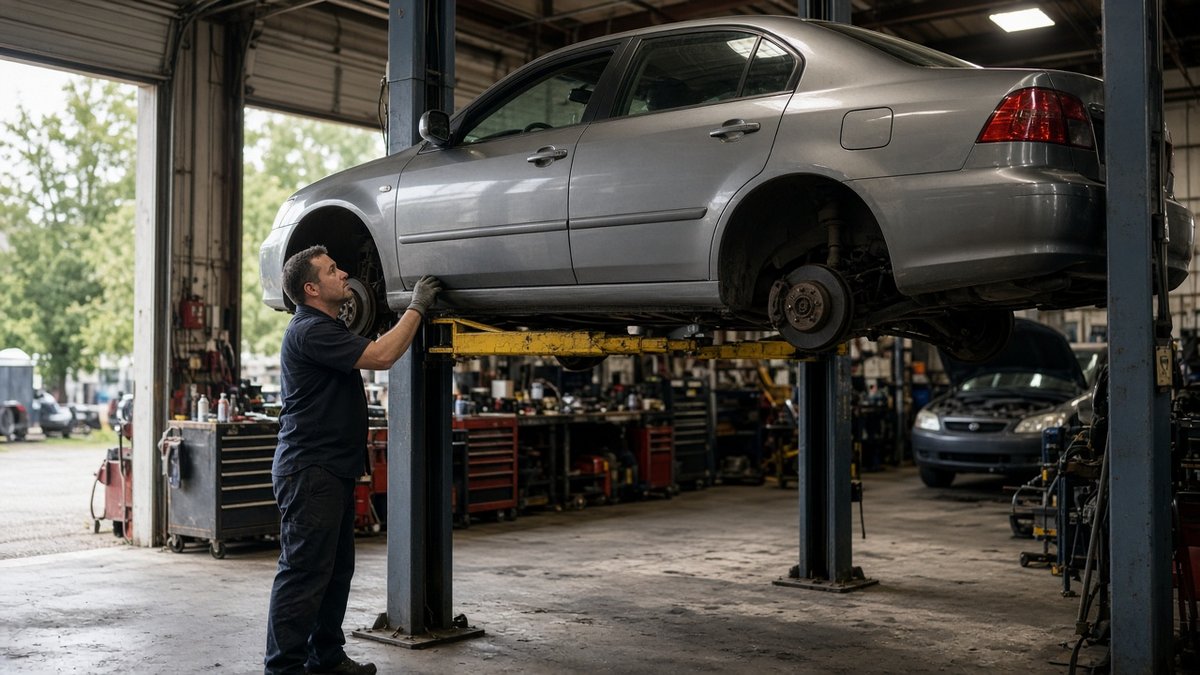
CARFAX shows power steering repair only when the shop or dealer that did the work reports service records, so a lot of pump, hose, and rack jobs never show up at all. When a line does appear, the part named matters most: a pump or hose on an older hydraulic system is usually ordinary wear, while a replaced steering rack, a repeat repair, or an open steering recall is worth real questions before you hand over money.
We're writing this in early October 2026, a few posts into a run on individual repair lines, because steering entries confuse people more than most. Shoppers see "power steering pump replaced" and assume the car was abused, then skip right past an electric steering recall that actually matters. So use the report to decide what to inspect, and let the test drive and a mechanic settle the rest.
How power steering work ends up on a report
A steering repair reaches CARFAX when the shop's system shares service data; CARFAX says its vehicle history reports are built from sources like service shops, dealers, and state agencies, and that not every event gets reported. Dealers and big chains tend to report. A small independent shop, or a seller who swapped a junkyard pump in the driveway, usually doesn't. That means a clean steering history is the normal result and proves very little. Honestly, the more useful question is whether the entries you do see fit the car's age, mileage, and where it lived.
Typical wording is short: "power steering fluid serviced," "power steering pump replaced," "power steering hose replaced," or "steering gear/rack replaced." Some fluid lines are just upsells at an oil change. A belt entry right before a pump entry is common too, since on many hydraulic cars the pump runs off the engine belt; our post on whether CARFAX shows serpentine belt replacement explains that pairing.
Pump, hose, or rack: what each line usually means
Pump and hose work on a hydraulic system is mostly wear and leaks, and AAA Club Alliance's guide to warning signs of a power steering leak lists the usual symptoms: a squeal at startup that often points to a worn belt, whining or groaning when you turn at low speed, stiffness that shows up at low speed and fades, and pink or amber fluid under the car. Kelley Blue Book's power steering pump cost guide puts the average pump job at roughly $842 to $941, and your car and zip code will move that. A recent pump on a 12-year-old car is, if anything, a small plus, because somebody already paid for it.
A rack line is bigger. The rack sits low behind the engine, labor is heavy, and an alignment is needed after it goes in, so we'd want the paperwork and an alignment entry close behind it. A rack replaced on a young car with no recall attached can also be collateral from a curb strike or a front-end hit, which is why we'd read it next to any damage lines and our guide on how CARFAX handles suspension repair.
Electric power steering and recalls
Most newer cars use electric power steering, and when it fails you usually get a warning message and a very heavy wheel rather than a fluid puddle. Recalls are a real part of this story. In a 2025 safety recall filed with NHTSA (recall 25V175), GM said certain 2016 to 2018 Cadillac CTS and 2017 to 2018 ATS, Camaro, and Corvette vehicles could lose electric steering assist while driving, that manual steering remains but takes more effort, especially at low speed, and that dealers would replace the steering gear assembly. NHTSA's investigation summary PE23014 on 2023 Tesla Model 3 and Model Y steering complaints is another example of how seriously regulators take loss of assist.
So when a report shows a dealer replacing a steering gear on one of those cars, that may simply be the recall getting done, which is good news. The bad version is a recall that's still open. CARFAX can flag some open recalls, but check the VIN on NHTSA's recall lookup anyway, and read our posts on open recalls on CARFAX and how NHTSA recall data differs from CARFAX.
How to check the steering yourself
Start with the report, then use your hands. Read every service line in order with mileage and shop name, and call the shop if a rack or pump entry looks odd; plenty of service writers will tell you what was done. On the test drive, turn lock to lock while parked and listen for whining or groaning, then drive slowly through a parking lot and feel for heaviness, notchiness, or a wheel that won't return to center. Look under the front for wet hoses or fresh fluid, and watch the dash for any steering warning. A pre-purchase inspection on a lift costs far less than a rack job and catches leaks the report never will.
One blunt warning, because we see it constantly: don't accept a seller's own PDF "report." Those are easy to edit, and our guide on how to spot a fake CARFAX report shows what to check. Run the VIN yourself. We're a licensed CARFAX and AutoCheck reseller, not affiliated with CARFAX, AutoCheck, or Experian, and our prices have been around $5.50 as a guest, about $4.50 for members, and about $6.75 for a bundle with both, versus retail that often sits around $39.99 to $44.99; confirm the current price at checkout because it moves. If the report says nothing and the steering groans, believe the steering, and see what CARFAX can and can't tell you about mechanical problems.
Comments (0)
No comments yet. Be the first to share your thoughts!
Log in to leave a comment.