
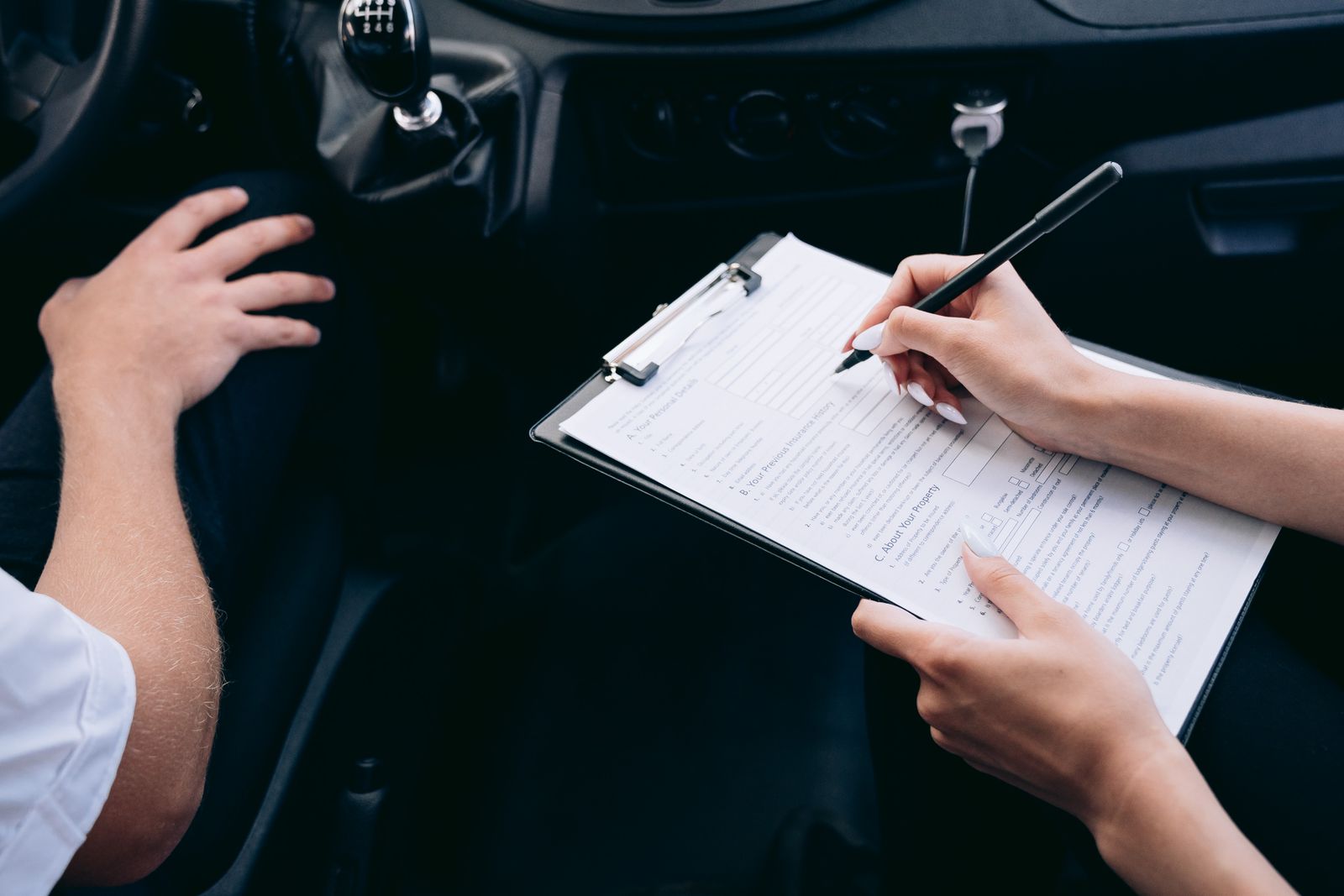
You message a Marketplace seller about a 2016 Accord and the first thing he types back is "which one?" Then he wants to meet in a grocery store parking lot, cash only, and when the title comes out it has somebody else's name on the front and a signature already scrawled on the back. He says it's his cousin's car. That's the whole pattern in about four minutes, and it has a name: curbstoning, usually paired with title jumping. Here's what both actually are, why they leave you stuck at the DMV, and how to check a seller before any money moves.
What curbstoning and title jumping mean
Curbstoning is an unlicensed dealer pretending to be a private seller. The name comes from cars parked at the curb or in vacant lots with a phone number in the window, though these days most of it happens on Facebook Marketplace, Craigslist and OfferUp. Every state requires people who buy and sell cars for profit to hold a dealer license once they pass a small yearly number. The Minnesota Attorney General puts that line at more than five vehicles in 12 months, Washington's Attorney General's office says five or more a year, and Maryland's MVA curbstoner page says three or more in a 12-month window may get you treated as an unlicensed dealer. So the threshold moves around by state, but the idea is the same everywhere.
Title jumping (some people call it title skipping or an open title) is the paperwork trick that makes curbstoning work. The flipper buys a car, has the previous owner sign the title over, and never puts it in his own name. Then he sells it to you with that stranger's signature on the back. He skips the title fee, the sales tax, and any record that he ever owned it. Texas spells this out bluntly in its TxDMV dealer manual: the under-five-a-year exemption only covers vehicles "owned and registered in that person's name," and if they're not in his name, he needs a license to sell even one.
Why it's your problem, not just his
Honestly, the tax dodge isn't what hurts you. What hurts is that a curbstoner has every reason to hide the car's past and almost nothing to lose if you find out later. The Minnesota AG lists rolled-back odometers, previously wrecked or salvaged cars, stolen cars, and bare-minimum repairs as the usual stock. The Utah DMV's private-party buying page adds the part people don't think about until they're at the counter: you may not be able to get the title transferred at all, and you have no legal protection in the deal.
We've seen what that looks like in recent reporting. In October 2025, Atlanta News First pulled history reports on nine cars listed on Facebook Marketplace by a Peachtree Corners broker and found five with mileage gaps of 80,000 miles or more, including a Honda Pilot advertised at 145,000 miles that showed 325,000. A family who bought a Ridgeline listed at 154,000 miles only found out when a mechanic pulled the report and saw 285,000 on the last emissions test. That's a mileage problem a $5 report would have caught before the handshake.
States are pushing back, slowly. In July 2025 WGN Investigates covered a Chicago block that neighbors said looked like a showroom, and the Illinois Secretary of State ended up citing a dealer for lending out dealer plates so cars could be sold on the street. Illinois then passed House Bill 2751, in effect since January 1, 2026, which bars dealers from parking and advertising cars for sale on public streets and lots. In Texas, the TxDMV penalty matrix lists curbstoning by an unlicensed dealer at $1,000 per vehicle for a first offense and $4,000 per vehicle after that. None of that gets your money back, though. Maryland's MVA says outright that it can't force a curbstoner to refund you.
Red flags, from the first message to the handoff
Most of these show up before you ever see the car. Look for a few together rather than panicking over one:
- The seller asks "which car?" when you message about the listing. The BBB suggests asking about "the car" without naming it, because a real private seller usually has just one.
- The same phone number or profile shows up on several different car listings.
- The name on the title isn't the name on the seller's driver's license, and the story is a cousin, an aunt, or a friend who moved out of state.
- The back of the title is already signed by someone who isn't there.
- The title was issued in just the last few months, which the Utah DMV specifically flags.
- The meetup is a parking lot, never the seller's home, and payment has to be cash.
- No maintenance records at all on a car that's supposedly been in the family for years.
Here's the catch with the "selling it for my cousin" line: sometimes it's true. A genuine estate sale or a family car can come with odd paperwork. But the fix in those cases is easy and legal, like the actual owner showing up, a power of attorney, or estate documents from the court. If the seller can't produce any of that, treat it as a flip.
How to check the seller and the car before you pay
Start with the VIN, before you drive across town. Ask for it in the first conversation, and if the seller won't give it, you've got your answer. Run a CARFAX or AutoCheck report and look at the title history, the last few odometer readings, and any auction or salvage records. On this site a single report runs about $5.50 as a guest or about $4.50 as a member, and a CARFAX plus AutoCheck bundle is around $6.75 as of early October 2026. Retail on the official sites gets quoted anywhere from $39.99 to $44.99, so confirm the price at checkout either way. We're a licensed reseller, not affiliated with CARFAX, AutoCheck or Experian.
Then match three things in person: the VIN on the dash and door jamb, the VIN on the title, and the name on the title against the seller's ID. If any one of them is off, stop. Look at the odometer box on the back of the title too. If it's already filled in and signed by someone else, the seller is asking you to accept a disclosure he didn't make. The San Diego City Attorney's guide says to have the seller fill out the title and odometer section in front of you and compare the signature against his license.
Last, do the transfer somewhere official. Kelley Blue Book suggests meeting at the DMV to complete it, and a seller who resists that is telling you something. Tennessee and a lot of other states also let you look up whether a "dealer" is actually licensed. The Tennessee Motor Vehicle Commission points buyers to verify.tn.gov and notes licensed dealers have to identify themselves in ads, including on Craigslist. And get a pre-purchase inspection from a mechanic you picked, not one the seller recommends.
If you already bought one
Don't sit on it. Gather the listing screenshots, messages, the title, and any bill of sale, then contact your state DMV's dealer or enforcement division and your attorney general's consumer office. Utah, for one, takes curbstoner reports through its Motor Vehicle Enforcement Division. If the title won't transfer, the DMV may be able to tell you what's needed from the last legitimate owner on the title. Look, there's no guarantee you'll get the money back, but a paper trail is the only way anyone else can act on it.
Related reading
If the seller only has a bill of sale and no title, read buying on Facebook Marketplace with only a bill of sale. For the mileage side, see odometer disclosure statement rules and how to detect odometer rollback. Flippers sometimes pair this with paperwork games covered in duplicate title fraud signs and the Marketplace VIN cloning scam, and they love handing over a PDF report they printed themselves, which is why fake CARFAX PDFs on Marketplace is worth a read. Not sure where to look for the VIN? Here's where to find the VIN on a car.
Sources
- Minnesota Attorney General: Curbstoning
- Washington State Attorney General: A warning about used car curbstoners
- Maryland MVA: Unlicensed dealers commonly known as curbstoners
- Utah DMV: Buying a vehicle from a private party
- Texas DMV: Motor Vehicle Dealer Manual (PDF)
- Texas DMV: Motor Vehicle Disciplinary Matrix (PDF)
- San Diego City Attorney: Curbstoning guide (PDF)
- Tennessee Department of Commerce and Insurance: Keep scammers out of the driver's seat
- Atlanta News First: Odometer discrepancies on Facebook Marketplace (October 2025)
- WGN Investigates via Yahoo News: Illinois cracks down on street showrooms (July 2025)
- Illinois State Senator Laura Murphy: HB 2751 signed into law
- Kelley Blue Book: What are the risks of a fake title?
- The Autopian: Why curbstoning and title jumping can be a nightmare for car buyers
- Better Business Bureau: Avoiding illegal car sales known as curbstoning
Comments (0)
No comments yet. Be the first to share your thoughts!
Log in to leave a comment.