
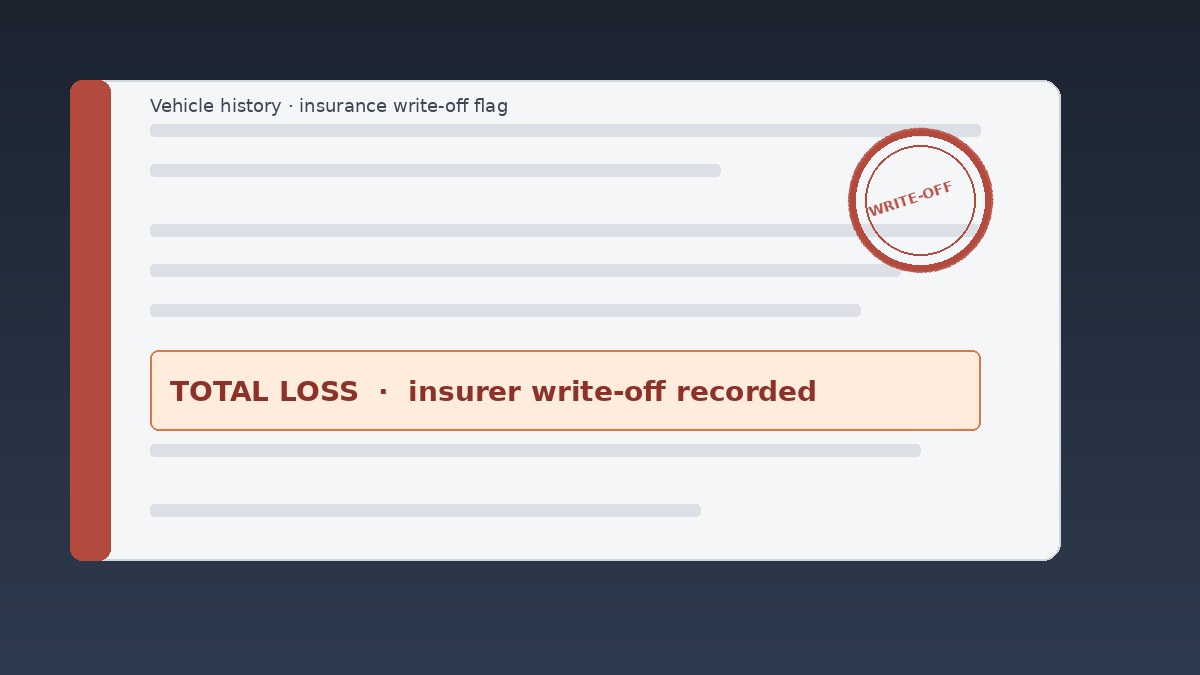
CARFAX picks up an insurance claim only when the event behind it reaches one of its data sources, so what you see is damage an insurer, police department, or shop reported, plus total losses, title brands, and thefts. The claim file itself lives in a different database. That gap bites when a seller swears the car "never had a claim" and the report seems to agree. Treat CARFAX as one layer, ask the seller for their own claims history, and get the car on a lift before you pay.
What insurance events CARFAX can show
CARFAX shows the damage side of a claim, meaning the accident or repair record, rather than the claim paperwork. The CARFAX vehicle history reports page lists accident history, damage severity, point of impact, repair records, airbag deployment, structural damage, and flood or lemon titles, drawn from more than 151,000 sources. When we pulled that page in early October 2026, the checklist never used the word "claim," and the footer said reports are based only on information supplied to CARFAX. So an insurer-paid repair usually surfaces as a dated damage line with a location and severity.
Branded titles are the insurance outcome CARFAX catches most reliably. When Consumer Reports tested reports on cars it knew had branded titles, it said CARFAX and AutoCheck didn't miss any. Our guides to total loss on CARFAX, stolen and recovered entries, and how to read a CARFAX report cover how those lines read, and accident reported on CARFAX explains the most common one.
Why a paid claim can still be missing
A paid claim can be missing because CARFAX only knows what someone sends it. Its own accident and damage report notes that not all accidents are reported to it. In January 2020 a CARFAX spokesperson told WBTV in Charlotte, after buyers said clean reports missed earlier crashes, that a new source may provide data for an event that occurred in the past. So a report you pull today can be clean, and the same VIN can show a crash months later.
Consumer Reports found reports were most likely to be wrong on cars with serious damage that were never declared a total loss. It added that wrecks can keep clean titles when the car has no collision coverage, is self-insured like many rental and fleet vehicles, or falls below the state's total loss threshold. That test dates to 2012, but CARFAX's footer still says it doesn't have the complete history of every vehicle. Our posts on unreported accidents and how long an accident takes to show dig into the lag.
Claims that often leave no trace
Some claims rarely leave a damage line, because nothing about them produces a repair record tied to that VIN. A claim the owner dropped, or one the insurer denied, paid nothing, so there may be no shop invoice to share. A liability payout fixes the other driver's car, so any record belongs to that car's VIN. Glass-only and small comp claims are hit and miss, and we haven't found CARFAX saying which ones it receives. See our posts on windshield replacement, hail damage, and deer hits.
Look, the cleanest hidden claim is the owner who cashed the check and never fixed the car, or paid cash at a shop that doesn't report. Honestly, we can't tell you how often that happens, and we didn't find anyone who publishes a number. Read what CARFAX doesn't show before you lean on a clean report.
Total losses go to NMVTIS
When an insurer totals a car, federal rules require it to report that car to the National Motor Vehicle Title Information System. The NMVTIS page for insurance carriers says insurers must report monthly on junk and salvage automobiles, including every total loss, even if the owner keeps the car. The rule, 28 CFR 25.55, covers the current model year and the four prior ones. Older cars are only strongly encouraged, a real gap on the cheap cars a lot of us shop.
The NMVTIS consumer page says about 20 million salvage or total loss records are in the system, but a search may still return a false negative such as "no junk or salvage history." It warns the same gaps can exist in private databases. It also notes that a stolen car labeled a total loss after 30 days can turn up in perfect condition and keep that tag. Our comparison of NMVTIS vs CARFAX and the guide to salvage vs rebuilt titles explain the brands.
NICB VINCheck covers theft and salvage
NICB's free VINCheck is the closest thing to a direct insurer lookup you can run. The VINCheck page says it shows whether a car was reported stolen and not recovered, or reported as salvage or flood-damaged, by participating insurers, which NICB says represent 92.49 percent of earned premium as of August 2026. You get five searches per IP address per day. The VINCheck terms say "total loss" and "salvage" are not synonymous in the insurance industry, so a totaled car can come back with no salvage hit. Our VINCheck vs CARFAX post covers when to run both.
The C.L.U.E. report holds the real claims history
The insurance industry's own claims history sits in a LexisNexis database called C.L.U.E., and a claim shows there whether or not a shop reported a repair. The CFPB says it reports up to seven years of auto insurance claims, and the Insurance Information Institute says most auto insurers contribute. Washington's insurance commissioner says insurers submit an entry when they start, deny, or pay out a claim. Tennessee's insurance department says entries list date of loss, type of loss, amount paid, and vehicle information.
You can't pull that report on a stranger's car. The Alabama Department of Insurance says that under the Fair Credit Reporting Act a C.L.U.E. report on property you want to buy can be accessed only by the owner, insurer, or lender, and we read that the same way for a car. The CFPB says the report is free once every 12 months. So ask the seller to order theirs through the LexisNexis request page and show you the auto entries for this VIN. Alabama adds that insurers who don't subscribe won't appear, so a blank report proves less than it seems.
What to do before you buy
Stack the checks, because each catches a different slice of insurance history. Pull CARFAX and AutoCheck yourself, run VINCheck, and for a recent car get an NMVTIS report, which the FTC says carries title, insurance loss, and salvage information. Ask the seller in writing whether there has ever been a claim. A dealer that bought the car at auction has no claims history of its own on it, so lean harder on the inspection.
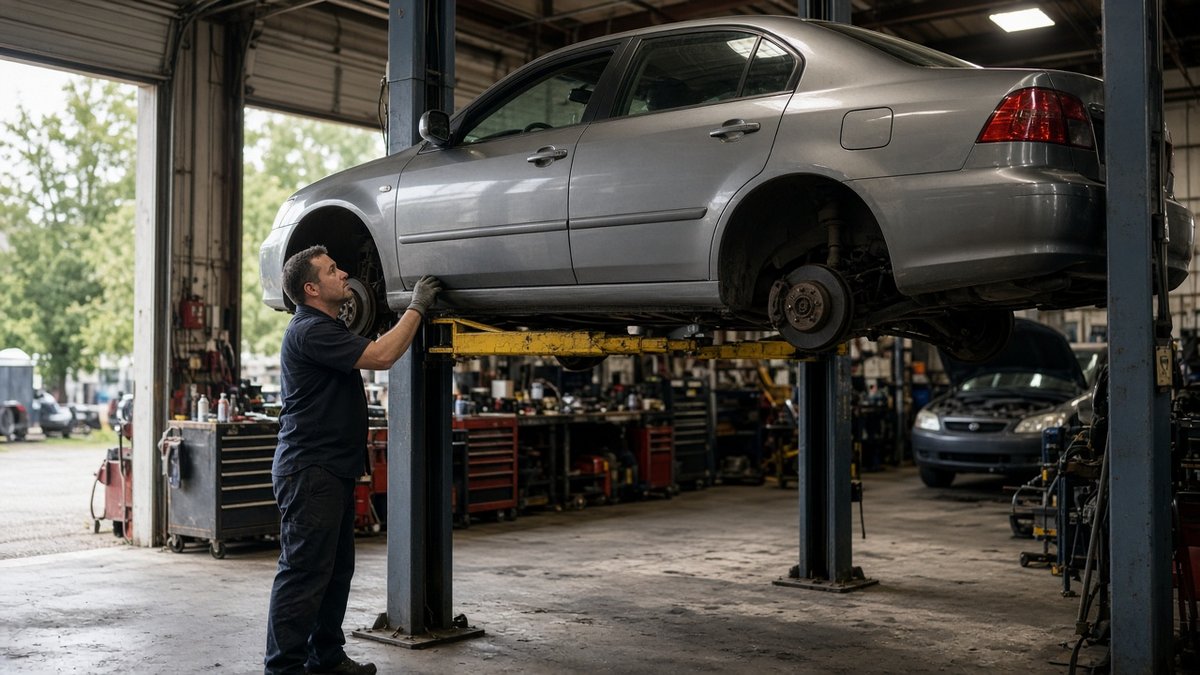
The FTC says a history report is no substitute for an independent inspection. Book a pre-purchase inspection and have the shop check panel backs and door jambs for paint overspray, which Consumer Reports flags as a bodywork sign, plus panel gaps. If a damage line shows, estimated repair cost on CARFAX helps size it, and prior total loss with a clean title covers old write-offs.
Pull the report yourself
Run the VIN yourself, since Consumer Reports said it knew of dealers altering reports that showed problems, and spotting a fake CARFAX report shows the tells. Through us a CARFAX report is about $5.50 as a guest or $4.50 as a member, and the bundle with AutoCheck is about $6.75, against roughly $39.99 to $44.99 retail, so confirm at checkout. We're a licensed CARFAX and AutoCheck reseller and we're not affiliated with CARFAX, AutoCheck, or Experian. A clean report on a car with a quietly paid claim is how people overpay.
Sources
- CARFAX, Vehicle History Reports (checklist, FAQ, disclaimer)
- CARFAX, Accident and Damage Report
- Consumer Reports, Don't rely on used car history reports (2012)
- WBTV, CARFAX customers say incomplete vehicle reports cost them thousands (January 2020)
- NMVTIS (U.S. DOJ), For Insurance Carriers
- eCFR, 28 CFR 25.55 Responsibilities of insurance carriers
- NMVTIS (U.S. DOJ), For Consumers
- NICB, VINCheck Lookup
- NICB, Terms of Use for VINCheck
- CFPB, LexisNexis C.L.U.E. and Telematics OnDemand
- Insurance Information Institute, What is a loss history report
- Washington Office of the Insurance Commissioner, C.L.U.E.
- Tennessee Department of Commerce and Insurance, C.L.U.E.
- Alabama Department of Insurance, What is a C.L.U.E. report (PDF)
- LexisNexis Risk Solutions, Consumer Disclosure request form
- FTC Consumer Advice, Used Cars


Comments (0)
No comments yet. Be the first to share your thoughts!
Log in to leave a comment.